_edited.jpg)
Bilingual Immersion Program for Toddlers in Singapore: A Nurturing Guide for Parents
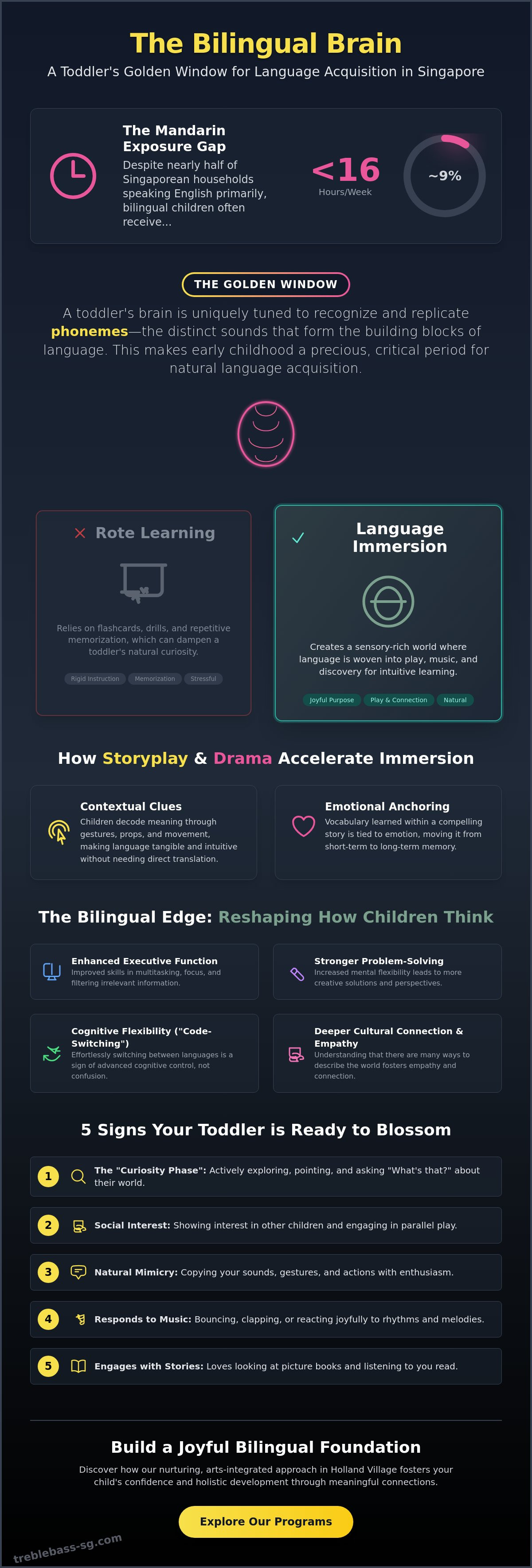
Did you know that while nearly half of Singaporean households primarily speak English, a 2026 study revealed that bilingual children often receive less than 16 hours of Mandarin exposure each week? This gap creates a common worry for families near Holland Village and Central Singapore who want their little ones to thrive in our unique linguistic landscape. You likely feel the pressure to start early, yet you dread the idea of "rote learning" quenching your child's natural spark. It's a delicate balance to strike when you want language to feel like a gift rather than a chore.
We understand that you're looking for a nurturing space where your child can respond naturally to a second language through play and deep connection. This guide shows you how a high-quality bilingual immersion program for toddlers Singapore uses storyplay and movement to build a bridge between curiosity and cognitive growth. You'll discover how weaving music and sensory discovery into every session helps your little one develop a foundation for future primary school success. We'll explore the magic of interactive storytelling and how a gentle, expert-led environment allows your child's potential to bloom with joyful purpose.
Key Takeaways
Understand why the toddler years represent a "golden window" for phoneme recognition and how immersion creates a natural environment for language acquisition.
Learn how storyplay and drama use movement and emotional anchoring to help your child decode and remember new words without the stress of rote learning.
Compare educational models to decide if a full-day preschool or a specialized bilingual immersion program for toddlers Singapore better suits your family's unique needs.
Identify the developmental signs, such as the "curiosity phase" and social interest, that indicate your little one is ready to thrive in a language-rich environment.
Discover how a nurturing, arts-integrated approach in Holland Village fosters your child's confidence and holistic development through joyful, meaningful connections.
Table of Contents
What is a Bilingual Immersion Program for Toddlers in Singapore?
At its heart, a What is a Bilingual Immersion Program is an invitation for your child to live within a language rather than study it. Instead of treating Mandarin or English as a subject to be memorized, immersion creates a sensory-rich environment where words are woven into the very fabric of play, music, and discovery. For a two-year-old, this means they aren't translating; they're simply experiencing life through a different linguistic lens. This natural approach mirrors how we learn our first language, making the process feel safe and intuitive.
Experts often point to the Critical Period Hypothesis, suggesting that the toddler years are a precious "golden window" for language development. During this time, a child's brain is uniquely tuned to recognize and replicate phonemes, the distinct sounds that form the building blocks of a language. This is particularly vital in our local context. With the 2020 census showing that 48.3% of Singapore residents speak English most frequently at home, a bilingual immersion program for toddlers Singapore helps bridge the gap for families who want to cultivate mother tongue fluency or introduce a second language before the formal demands of primary school begin.
It's helpful to distinguish this from "dual language" models, which often rely on heavy translation. In a full immersion setting, we use contextual clues like gestures, props, and facial expressions to help toddlers decode meaning without needing an English explanation. This context-heavy model prepares them for the diverse educational landscape in Singapore, whether you are preparing for a local MOE primary school or an international pathway.
The Science of the 'Bilingual Edge' in Early Childhood
Bilingualism does more than just add words to a child's vocabulary; it actually reshapes how they think. Research shows that bilingual toddlers often exhibit enhanced executive function, which includes better multitasking and problem-solving skills. When you hear your child "code-switch," using words from both languages in one sentence, it isn't a sign of confusion. It's a beautiful display of cognitive flexibility. Beyond the brain, this journey builds empathy as children learn there are many ways to describe the world, fostering a deep sense of cultural connection from their very first steps.
Immersion vs. Rote Learning: Why Play Wins
Traditional methods often rely on flashcards or repetitive drills, but these can quickly dampen a toddler's natural curiosity. We believe that play is the highest form of research. By using "Storyplay," where a narrative comes to life through movement and song, we create lasting neural pathways. This approach turns language acquisition into a "joyful purpose." When a child is laughing and moving, their brain is most receptive to learning, ensuring that their first experience with a second language is one of wonder and delight rather than rigid instruction.
How Storyplay and Drama Accelerate Language Immersion
Language is a living thing. When a toddler sees a teacher mime eating a crisp apple while saying "píngguǒ," they aren't just hearing a sound; they're connecting a physical sensation to a new word. This is the power of contextual clues. In a bilingual immersion program for toddlers Singapore, we move away from abstract concepts and toward tangible, sensory experiences. By using props, costumes, and exaggerated movements, we help children decode meaning naturally. This method removes the frustration of not understanding and replaces it with the thrill of discovery.
Stories provide what experts call "emotional anchoring." We know that a child's brain prioritizes information that is tied to a strong feeling or a compelling narrative. When vocabulary is tucked inside a story about a brave little rabbit or a funny trip to the market, those words stick. This emotional connection ensures that language is stored in long-term memory rather than just being a fleeting sound. Drama also offers a safe stage for mimicry and repetition. Toddlers are natural mimics; by playing a character, they can practice difficult phonemes and sentence structures without the fear of making a mistake. It builds a quiet confidence that encourages them to "try" the second language in their daily lives.
Playtots and Bubbles: The Power of Themed Storyplay
In our Bubbles and Playtots sessions, we don't just read a book; we step inside it. A themed session like "A Trip to the Market" introduces functional, everyday vocabulary through active participation. Your child moves from being a passive listener to an active protagonist who "buys" fruit or "chats" with the shopkeeper. You can see this magic in action through Treble Bass's Playtots Chinese storyplay, where every lesson is a new adventure designed to spark curiosity. This transition to active drama helps toddlers own the language they are learning.
Developing 'Mother Tongue' Affinity from Age One
For our youngest learners, the Baby C (喜宝宝) approach focuses on the gentle sounds of the mother tongue through music and rhythm. These melodic elements lower the "affective filter," which is the emotional barrier that can sometimes block learning. When a child feels safe and bonded with their parent during a class, their brain is wide open to new linguistic inputs. This early exposure is a vital part of Building a Bilingual Foundation in Singapore's multicultural society. If you're ready to see your child respond naturally to a second language, consider starting a nurturing language journey that celebrates their unique potential.
Preschool vs. Enrichment: Which Immersion Model is Right for You?
Selecting the right path for your child's language journey often feels like a balancing act between logistical needs and developmental goals. While some families thrive in full-day environments, others find that a specialized bilingual immersion program for toddlers Singapore offers a more tailored, gentle introduction to a second language. It's a choice that depends heavily on your child's personality and your family's daily rhythm. We believe that the best environment is one where your toddler feels safe enough to explore and curious enough to speak.
A common debate among parents is whether "intensity" always equals "quality." For a two-year-old, eight hours of immersion might lead to fatigue rather than fluency. High-quality enrichment focuses on "targeted bursts" of language. These short, high-energy sessions capture a toddler’s attention when it's at its peak, ensuring that every minute is spent in active, joyful discovery. This model is especially supportive for families who speak English at home and want to ensure their child receives consistent, high-quality exposure to Mandarin or a second language without the commitment of a full-day school schedule.
When to Choose a Full-Immersion Preschool
Full-day immersion is often the ideal choice for working parents who require comprehensive childcare alongside language exposure. These centers provide a steady stream of the target language throughout daily routines like mealtimes and nap transitions. However, it's essential to consider your child’s social-emotional readiness. Some toddlers flourish in large group settings, while others may feel overwhelmed by the noise and pace of a full-day schedule. If you're exploring ways to build early language skills through narrative and movement, you might find inspiration in English Storyplay and Drama Classes in Singapore, which highlight how structured play fosters confidence.
The Benefits of Specialized Enrichment Centers
Enrichment centers offer a unique flexibility that many preschools can't match. With lower student-teacher ratios, facilitators can provide the maternal empathy and individualized attention that young toddlers crave. This environment allows for "language stacking," where a family might choose Playtots Chinese storyplay on a weekend and Bubbles English storyplay during the week. These sessions use the arts, specifically drama and dance, to make the bilingual immersion program for toddlers Singapore feel like a series of exciting adventures. By focusing on specific themes and artistic expression, enrichment ensures that language learning remains a highlight of your child’s week rather than a routine obligation.
5 Signs Your Toddler is Ready for a Bilingual Immersion Program
Every child blooms at their own pace, but there are certain whispers of readiness that suggest a toddler is eager to expand their world. Recognizing these developmental milestones helps you choose the right moment to introduce a bilingual immersion program for toddlers Singapore. When we align a child’s natural curiosity with a language-rich environment, the results feel less like "learning" and more like a joyful discovery of their own potential.
If you're observing these five signs, your little one might be ready to embark on their bilingual journey:
The 'Curiosity Phase': When your toddler starts pointing at everything in sight and looking to you for a label, they're showing a hunger for vocabulary. This is the perfect time to introduce names for things in a second language.
Social Readiness: If your child begins to watch other children with interest or engages in "parallel play," they are ready for the community-oriented atmosphere of a group session.
Sound Sensitivity: Children who bounce to the rhythm of nursery rhymes or attempt to mimic animal sounds are displaying the auditory awareness needed to pick up new phonemes.
Attention Span: You don't need hours of focus. If they can enjoy a 15-minute picture book or a short sensory activity, they have the stamina for a storyplay-based class.
Parental Readiness: Your desire to provide a nurturing, non-pressured start is a vital sign. When you value the emotional connection over rigid results, your child feels safe to explore.
What if My Child is Shy?
Shyness is often just a sign of a thoughtful, observant nature. A high-quality speech and drama class singapore can be a transformative tool, helping these quiet explorers find their voice at their own speed. During the "parallel play" stage, children soak up language like sponges even if they aren't ready to speak it out loud yet. Drama provides a safe stage for self-expression where every child’s unique journey is celebrated and protected.
Preparing Your Toddler for Their First Session
Transitioning to a new environment is a big step for small feet. You can help by talking about the "new friends" and the "magic stories" you'll discover together before you arrive. Attending a trial class is a wonderful way to observe the "vibe" of the center and ensure it matches your child's temperament. Always remember that language acquisition is a marathon, not a sprint; the goal is to cultivate a lifelong love for learning. If you see these signs of readiness in your little one, we invite you to explore our nurturing programs and start your bilingual adventure today.
Building a Bilingual Foundation at Treble Bass Singapore
At Treble Bass, we believe that every child’s language journey is a unique story waiting to unfold. Our philosophy centers on nurturing the "whole child," where arts and language aren't viewed as separate subjects but as integrated tools for holistic development. We've cultivated a vibrant space in Holland Village where families from across central Singapore can find a sanctuary of playful discovery. This is a voice that celebrates the wonder of early childhood, valuing meaningful connections over rigid instruction to create an atmosphere of safety and joy.
Our signature "Storyplay" methodology brings this vision to life through sensory-rich experiences. Whether your child is exploring Mandarin through Playtots or English through Bubbles, they're stepping into a world where vocabulary is learned through movement, music, and shared laughter. This approach ensures that a bilingual immersion program for toddlers Singapore feels like a natural extension of their innate curiosity. We use a cause-and-effect logic in our teaching; by engaging a child’s imagination, we accelerate their cognitive growth and linguistic confidence simultaneously.
The mentors at Treble Bass are the heart of this transformative experience. They bring a sophisticated blend of high-level artistic backgrounds and deep early childhood empathy. This dual expertise allows them to guide each child with a gentle authority, ensuring that while the curriculum is professionally grounded, the atmosphere remains as warm and encouraging as a mother’s hug. Our team is protective of each child’s unique journey, valuing their internal growth as much as their technical proficiency in a second language.
Our Programs: From Baby C to Adventurers
We offer a thoughtful progression that grows alongside your child. It begins with the gentle rhythms of Baby C (喜宝宝) for our youngest learners and moves toward the expressive world of Adventurers Chinese Speech & Drama for children aged three to six. To further support physical development, we integrate Starsteps themed dance, which blends creative movement with motor skill cultivation. Small class sizes are a cornerstone of our approach, allowing for the personalized attention and individual rapport that help toddlers truly flourish.
Join Our Nurturing Community
We invite you to join our community and experience the "joyful purpose" that defines every session at our center. Our focus extends beyond simple language exposure; we aim to facilitate bonding and create lasting memories between family members. By choosing a bilingual immersion program for toddlers Singapore that values the heart as much as the mind, you're giving your child a gift of confidence that will last a lifetime. Book a trial for our bilingual immersion programs today! and discover how we can build a beautiful foundation for your child's future together.
Cultivating Your Child's Linguistic Journey
Choosing the right path for your toddler's language development is a beautiful act of love and foresight. We've explored how a bilingual immersion program for toddlers Singapore transcends traditional instruction by turning every lesson into a sensory-rich adventure. By prioritizing storyplay over rote memorization, you're not just teaching a second language; you're fostering a lifelong sense of confidence and cognitive flexibility. Whether your child is just beginning to mimic sounds or is ready to step onto a "safe stage" through drama, the goal remains the same: to make language feel like a natural, joyful part of their world.
Since 2015, our mission at Treble Bass has been to nurture the whole child through a specialized pedagogy designed for ages one to six. Centrally located in Holland Village, our mentors combine artistic expertise with maternal empathy to ensure every child feels protected and inspired. We invite you to see your little one respond naturally to a new world of words and movement. Discover our Nurturing Bilingual Programs at Holland Village and take the first step in this transformative journey. We can't wait to watch your child's potential bloom with joyful purpose.
Frequently Asked Questions
Is my toddler too young for a bilingual immersion program in Singapore?
Your toddler is never too young to begin their journey, as the brain is most receptive to new sounds during the first three years of life. Starting a bilingual immersion program for toddlers Singapore at age one allows them to soak up phonemes naturally through melody and rhythm. This early exposure builds a comfortable familiarity with the language long before formal schooling begins, ensuring their first steps into bilingualism are filled with wonder rather than pressure.
We don't speak Mandarin at home; will my child be lost in a Chinese immersion class?
Your child won't feel lost because immersion relies on contextual clues like gestures, props, and facial expressions rather than direct translation. Even if English is your primary household language, our mentors use storyplay to help toddlers decode meaning through action and emotion. This approach creates a safe environment where they can respond naturally to Mandarin, building a bridge between home and school without requiring parents to be fluent themselves.
What is the difference between a bilingual program and a second language class?
A bilingual immersion program focuses on experiencing the language through daily activities and play, whereas a second language class often treats it as an academic subject. In our immersion setting, children don't just learn words; they live them through music, drama, and sensory discovery. This immersive approach ensures that the second language becomes a functional tool for communication and expression rather than a list of vocabulary to be memorized for a test.
How long does it take for a toddler to start speaking in their second language?
Every child’s linguistic journey is unique, but many toddlers go through a "silent period" where they observe and absorb before speaking. You might notice your child responding to instructions or humming class songs within a few weeks. Actual verbal production usually blossoms after several months of consistent exposure. We value this internal growth, knowing that their silent observation is a vital stage in building the confidence to eventually speak with joyful purpose.
Will learning two languages at once cause speech delays in my toddler?
Research consistently shows that bilingualism does not cause speech delays; in fact, it often enhances cognitive flexibility and problem solving. While some toddlers might mix languages or "code-switch" temporarily, this is a sophisticated sign of their brain organizing two linguistic systems simultaneously. We protect each child’s unique journey, understanding that their ability to navigate multiple languages is a transformative tool for their overall holistic development and future academic success.
What should I look for when visiting a bilingual enrichment center in Singapore?
Look for a nurturing environment where the teachers balance professional expertise with genuine maternal empathy. Observe whether the children are actively engaged in play or if they seem restricted by rigid instruction. A high-quality bilingual immersion program for toddlers Singapore should offer low student-teacher ratios and a curriculum rooted in storyplay. Ensure the space feels safe and inviting, sparking excitement about your child’s potential rather than focusing solely on technical proficiency.
Can my child join a bilingual program mid-term?
Most enrichment programs welcome new families mid-term, as our storyplay sessions are designed to be inclusive and modular. Since we focus on building meaningful connections and joyful discovery, a child can step into our world at any point and feel supported. Our mentors are skilled at helping new explorers transition smoothly into the group, ensuring they feel safe and encouraged as they begin their own linguistic adventure alongside their new friends.
How does storyplay help with bilingualism compared to traditional lessons?
Storyplay helps by providing emotional anchoring, making words more memorable when they are part of a compelling narrative. Unlike traditional lessons that might rely on flashcards, storyplay involves the whole child through movement and artistic expression. This sensory-rich experience creates lasting neural pathways, allowing toddlers to acquire language as a natural, lived experience. It transforms learning into a series of exciting discoveries that appeal to both a child's intellect and their heart.


Comments