_edited.jpg)
Best Music Classes for Toddlers in Singapore: A Nurturing Guide for 2026
Last Tuesday, a three year old named Liam sat hesitantly at the edge of the circle, his eyes wide as he watched the other children sway to a gentle rhythm. Like many toddlers who feel a bit overwhelmed in new environments, he needed a space that felt like a warm embrace rather than a high-pressure stage. You likely believe that early education should be a journey of wonder, yet it's easy to feel anxious about rigid, exam-focused schools that might stifle your child's natural curiosity. Finding quality bilingual exposure that doesn't feel forced is another common challenge parents face in our busy city.
We promise to help you discover how the right music classes for toddlers can turn these quiet moments into "little sparks" of confidence. By blending our signature StoryPlay Adventures with kinesthetic learning, we create a fertile environment where your child can develop their Mandarin and English skills through joyful discovery. This guide walks you through the most nurturing musical experiences available in Singapore for 2026, focusing on holistic growth and the precious bonding time you'll share with your little one as they find their voice.
Key Takeaways
Understand why modern music education in Singapore is shifting away from rigid exams toward holistic sensory growth and language development.
Learn how the innovative Storyplay method uses narrative arcs and melody to build your child’s bilingual confidence in both English and Mandarin.
Discover how to select the best music classes for toddlers by prioritizing nurturing teacher-to-student ratios and convenient central locations like Holland Village.
Gain practical tips for your first session, including how to transition from a spectator to a supportive "play partner" in your child’s discovery.
Explore how specialized programs nurture "little sparks" of curiosity from the inside out through immersive musical adventures and meaningful connections.
Table of Contents Why Music Classes for Toddlers in Singapore are Shifting Toward Holistic Growth The Storyplay Method: Integrating Music, Language, and Drama Choosing the Right Music School in Singapore: A Parent’s Guide Preparing for Your First Toddler Music Session Discover Treble Bass: Nurturing Bilingual Sparks in Holland Village
Why Music Classes for Toddlers in Singapore are Shifting Toward Holistic Growth
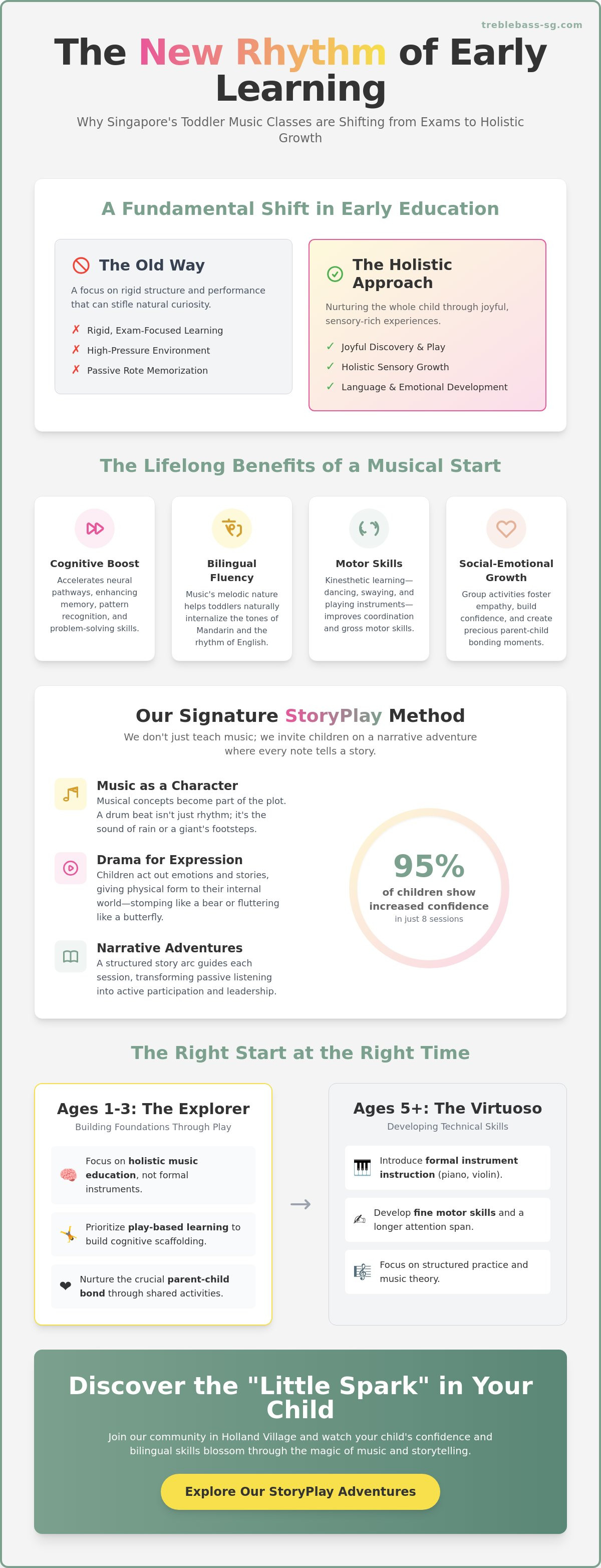
In 2026, the landscape of early childhood enrichment has undergone a beautiful transformation. Toddler music classes are no longer just about keeping a steady rhythm or learning a simple tune; they've become vibrant hubs for sensory and language development. Singaporean parents are intentionally moving away from the traditional "exam-culture" that once defined enrichment. Instead, they're seeking spaces where their child's unique journey is celebrated through joyful discovery and laughter. This shift reflects a deeper understanding that a child's first three years are a precious window for nurturing the soul and the mind simultaneously.
Scientific research highlights how musical exposure during these formative years accelerates neural pathways specifically linked to language acquisition. In Singapore's unique bilingual environment, music serves as an essential tool for achieving fluency in both Mandarin and English. Since Mandarin is a tonal language, the melodic variations found in music classes for toddlers help children internalize linguistic nuances naturally. We believe in creating a fertile musical learning environment where these "little sparks" of curiosity can grow into a lifelong love for communication and culture.
The Benefits of Early Musical Exposure
Engaging with music at a tender age allows children to develop sophisticated auditory patterns. These patterns are the building blocks that help toddlers distinguish between different linguistic tones, making them more perceptive listeners. We also focus on kinesthetic learning, where moving to a rhythmic beat improves gross motor skills and coordination in active toddlers. Beyond the physical and cognitive, these sessions ignite social-emotional sparks. By participating in group singing and shared play, children build the confidence they need to navigate the world with empathy and a sense of belonging.
Music vs. Instrument Lessons: What is Age-Appropriate?
Parents often wonder when their child should start formal training on the piano or violin. While these are wonderful goals, formal instrument instruction usually begins after age five, once a child's fine motor skills and attention span have matured. For little ones aged 1 to 3, the focus remains on holistic music education methods that prioritize play-based foundations. These experiences are vital because they prepare the brain for later academic success in Singapore schools. By nurturing a child from the inside out, music classes for toddlers provide the emotional and cognitive scaffolding required for more rigid instruction later in life. We value these meaningful connections between parent and child, ensuring that every sway and tap of a drum is a step toward a bright, confident future.
The Storyplay Method: Integrating Music, Language, and Drama
At Treble Bass, we believe every child is a little spark waiting to catch fire. Our Storyplay method isn't just about learning notes; it's a narrative adventure that invites children into a living book. We use a structured narrative arc where musical concepts become characters and plot points. Instead of simply hitting a drum, a toddler might be "knocking on a giant's door" or "mimicking the sound of rain" in a tropical forest. This context makes abstract sounds tangible and memorable. These music classes for toddlers transform the classroom into a safe space for discovery, where every beat tells a story.
Drama plays a vital role in this holistic approach. Toddlers often face big emotions they don't have the words for yet. Through dramatic play, they can stomp like a grumpy bear or flutter like a happy butterfly, giving physical form to their internal world. As they move from passive listening to becoming active "Adventurers," they build the confidence to lead their own journeys. This transition is crucial for social development, as recognized by the Early Childhood Development Agency (ECDA) in their guidelines for quality early childhood experiences in Singapore.
Music for Mandarin Acquisition
The "Mandarin hurdle" is a common worry for many Singaporean parents, but music provides a joyful shortcut. Because Mandarin is a tonal language, its natural rise and fall mimic melodic patterns perfectly. When a child sways to a Mandarin rhyme, they're absorbing the language's cadence without the stress of formal instruction. In our experience, a single 45 minute session of storyplay often results in better vocabulary retention than hours of rote memorization because the music acts as a "hook" for the memory. If you're looking for a way to spark a love for the language, our StoryPlay Adventures offer a nurturing start.
English Storyplay and Literacy
Our Bubbles and Bloomers themed sessions focus on building a rich English vocabulary through sensory-rich storytelling. We've found that rhythmic awareness is a direct precursor to phonological awareness, which is essential for early reading and literacy. When toddlers clap out syllables or match their movements to a steady beat, they're training their brains to recognize the patterns of speech. Storyplay serves as a bridge between auditory rhythm and verbal expression. This foundation ensures that when they eventually pick up a book, the sounds and structures of the English language already feel like old friends.
Choosing the Right Music School in Singapore: A Parent’s Guide
Finding a space where your child's curiosity can bloom requires a discerning eye. It's about more than just a convenient time slot; it's about finding a fertile musical learning environment where your toddler feels safe to explore. When you evaluate music classes for toddlers, look for a school that prioritizes the emotional landscape of the child alongside pedagogical excellence. A nurturing expert doesn't just teach notes; they spark joy from the inside out.
Location plays a vital role in your weekly rhythm. For many busy families in Singapore, Holland Village serves as a central anchor. Choosing a school in this area means you're within a 12-minute drive of most Central Singapore neighborhoods. This convenience allows parents to transition from a busy workday or grocery run at Jelita to a moment of meaningful connection with their child without the stress of a long commute.
Class dynamics often determine the depth of kinesthetic learning. We find that smaller groups, typically with a ratio of one teacher to five students, allow for those precious "nurturing" moments that larger franchises often miss. In these intimate settings, teachers can adapt the curriculum to your child's unique developmental pace. If your little one needs an extra minute to process an auditory pattern or prefers to observe before swaying to the rhythm, a small class provides the safety to do so.
What to Look for During a Trial Class
The trial class is your window into the school's soul. Observe the teacher's empathy through a specific lens. If a child begins to cry or feels shy, does the teacher offer a gentle, musical invitation or a rigid instruction? This distinction is crucial for building long-term confidence. You should also perform a quick safety audit of the environment:
Are the instruments, such as egg shakers and rhythm sticks, cleaned after every session?
Do the props meet EN71 safety standards for tiny hands?
Is the room designed with soft edges and enough space for free movement?
Finally, apply the "Spark" test. Your child doesn't need to master a scale in forty minutes. Instead, look for a shining expression or a lingering smile as they leave the room. That emotional resonance is the true indicator of a successful session.
Central Singapore Enrichment Hubs
Holland Village has evolved into a preferred destination for music classes for toddlers because of its family-friendly ecosystem. Parents can enjoy a quiet coffee at Chip Bee Gardens while their child discovers the magic of StoryPlay Adventures. Unlike large international franchises that often feel clinical, boutique centers in this hub offer a more personal, narrative-driven approach to education.
These independent centers often provide a holistic path that grows with your family. You might start with infant bonding sessions and naturally progress into preschool drama and rhythmic play. This continuity builds a sense of community and trust, ensuring that the transition from one developmental stage to the next feels like a joyful, familiar journey rather than a leap into the unknown.
Preparing for Your First Toddler Music Session
Stepping into your first session is a beautiful milestone in your child's developmental journey. It's helpful to remember that every child's internal rhythm develops at a unique pace. When you enroll in music classes for toddlers, don't worry if your 1-year-old chooses to sit and watch from the sidelines. This observation is a vital part of their kinesthetic learning process. They're absorbing auditory patterns and mapping the room's energy long before they pick up a shaker. Your role is that of a "play partner." Instead of being a spectator, your participation creates a safe harbor. When you sway and sing, you're signaling that this fertile musical learning environment is a place of joy and security.
Preparation helps ease the transition from the busy Singapore streets into our melodic sanctuary. Pack a small bag tailored for our tropical climate and active indoor play. Since our spaces are comfortably air-conditioned, a light cardigan helps during the transition from the humid outdoors. Practical items to include are:
Non-slip socks to ensure steady movement on play mats.
A leak-proof water bottle to stay hydrated after active StoryPlay adventures.
A spare set of clothes for the inevitable post-class snack or messy play.
Consistency transforms a simple activity into a foundational building block for growth. Attending a full 10-week term allows the brain to build strong neural connections through repetition. Sporadic attendance can be jarring for a toddler's routine; however, weekly sessions foster a sense of belonging and confidence that "little sparks" need to truly shine.
Helping a Shy Child Settle In
Our "Nurturing Expert" approach honors every child's autonomy. Teachers at Treble Bass use gentle encouragement to spark curiosity, allowing children to move at their own speed. You might see your child simply swaying or staring intently at the teacher; they're still deeply engaged in the learning process. You can reinforce these connections at home by humming class melodies during bath time or revisiting the stories we explored together. This bridge between the classroom and home helps even the quietest observers find their voice.
Understanding the Singapore School Term Cycle
Most enrichment centers in Singapore follow the four-term cycle aligned with the Ministry of Education (MOE) schedule. Classes typically run in 10 to 12-week blocks, with major breaks occurring in March, June, September, and December. When planning your year, consider how holiday camps can supplement regular terms without causing burnout. For toddlers under age 3, aim to balance enrichment with plenty of unstructured downtime. We recommend limiting organized music classes for toddlers to once or twice a week to maintain a joyful, pressure-free atmosphere.
Discover Treble Bass: Nurturing Bilingual Sparks in Holland Village
At Treble Bass, we believe music is a transformative tool that shapes a child's world from the inside out. Our philosophy goes beyond teaching notes; it's about creating a fertile musical learning environment where your child feels safe to explore. Located in the heart of Holland Village, our studio serves as a sanctuary for families seeking more than just standard music classes for toddlers. We focus on holistic development, using our unique StoryPlay Adventures to ignite curiosity and confidence in every little learner.
Our curriculum features two distinct paths: Playtots, which immerses children in the beauty of Mandarin, and Bubbles, our English-led program. Both use the power of narrative to make language acquisition feel natural and joyful. For those little ones who love to move, our Starsteps program offers a refreshing difference. Instead of rigid ballet positions, we emphasize creative movement and themed dance. This approach encourages kinesthetic learning, allowing children to express their emotions through swaying and rhythmic play without the pressure of strict technique.
The heart of our studio lies in our educators. Our teachers are far more than instructors; they are mentors and motherly figures who bring decades of artistic experience to every session. They understand the delicate balance between professional expertise and maternal empathy, ensuring every child feels seen and encouraged. This nurturing presence helps children develop their auditory patterns and social skills in a space that feels like a second home.
From Baby C to Bloomers: A Journey of Growth
We've designed our programs to grow alongside your child from infancy until they reach age six. The journey begins with parent-accompanied classes that focus on building meaningful connections through shared melodies and sensory play. As your child matures, they transition into independent speech and drama sessions, where they find their own voice. This progression isn't just about musical skill; it's about the little sparks of joy that happen when a child discovers they can communicate and create. These shared moments in the classroom help forge lifelong bonds between parents and children while preparing them for the transition to primary school.
Join Our Community in Central Singapore
We invite you to step into our joyful space and witness the magic of discovery firsthand. Whether you're interested in the Mandarin immersion of Playtots or the whimsical storytelling of Bubbles, a trial session is the perfect way to start your journey. Our Holland Village studio is ready to welcome your family into a community that values laughter, empathy, and artistic vibrancy. Experience how we nurture every child's unique journey through the power of song and story. It's time to let your child's potential shine in an environment built on love and expertise.
Book a trial and spark your child’s joy at Treble Bass
Ignite Your Child's Musical Journey at Holland Village
Choosing the right environment for your child's first notes is about more than just rhythm; it's about fostering a lifelong love for learning through holistic development. Since we opened our doors in 2015, Treble Bass has focused on bridging language acquisition and emotional growth through a specialized bilingual curriculum in Mandarin and English. By integrating drama and storytelling into our music classes for toddlers, we ensure every session becomes a fertile ground for discovery. These early experiences don't just build musical skill. They strengthen the bond between you and your little one while accelerating cognitive milestones through kinesthetic learning. Our cozy studio in Holland Village serves as a safe haven where your child's curiosity can truly shine. We've seen how the right melody transforms a quiet moment into a breakthrough of confidence. Take the first step toward nurturing those little sparks as we head into 2026.
We can't wait to welcome you and your little one into our musical family for a morning of playful discovery and laughter.
Frequently Asked Questions
At what age should I start music classes for my toddler in Singapore?
You can start music classes for toddlers as early as 18 months old to take advantage of peak brain plasticity. Research indicates that 80% of a child's brain development occurs before age 3, making this a vital window for auditory and sensory stimulation. At Treble Bass, our Playtots program welcomes these little sparks when they're ready to explore rhythm and movement in a safe, nurturing space.
Will my child learn to play an instrument like the piano in these classes?
No, your toddler won't begin formal piano lessons just yet, as their fine motor skills are still developing. Instead, they interact with percussion instruments like rhythm sticks and hand drums to build a strong musical foundation. These activities develop the hand-eye coordination and finger independence required for future study. We focus on nurturing a love for music first, ensuring they're ready for technical instruction when they reach 5 years old.
What is the difference between storyplay and standard music classes?
Storyplay differs from standard music classes by weaving musical concepts into an immersive narrative journey rather than just focusing on repetitive drills. While traditional classes might prioritize technical rhythm exercises, our StoryPlay Adventures use imaginative themes to teach Mandarin vocabulary and emotional expression. This holistic approach means your child isn't just hitting a drum; they're part of a story that sparks curiosity and makes language acquisition feel natural.
My child is very shy; will they be able to participate in a group class?
Yes, shy children often thrive in our environment because we prioritize emotional safety over rigid instruction. We keep our class sizes small, often capped at 6 students, to ensure every child feels seen and supported. It's common for a child to observe quietly for the first 2 sessions before they begin swaying or singing along. Our teachers are mentors who understand that confidence grows at its own pace.
Are the classes conducted in English or Mandarin at Treble Bass?
Our Playtots classes are conducted in Mandarin to provide a rich immersion environment for your little one. In Singapore's bilingual landscape, early exposure to the sounds and tones of Mandarin through song is incredibly effective for language acquisition. We use music as a bridge to make the language accessible and fun. You don't need to be a fluent speaker at home; the melodic nature of the class helps both parent and child learn together.
Can I join the class with my 2-year-old, or is it drop-off?
This is a parent-accompanied program designed to foster meaningful connections between you and your child. We believe that 2-year-olds learn best when they feel the security of a loved one nearby. Your presence allows you to share in their little sparks of discovery and reinforces the learning at home. These shared musical experiences create lasting memories and give you practical tools to continue the musical journey together outside the classroom.
How much do toddler music classes usually cost in Singapore?
In Singapore, music classes for toddlers typically range from S$35 to S$60 per session when booked as part of a full term. Most reputable schools also require a one-time registration fee, which averages around S$50 to S$80 across the industry in 2024. These rates reflect the specialized training of the educators and the high-quality instruments provided. Investing in these early years provides a significant return in cognitive development and social confidence.
What happens if we miss a class due to travel or illness?
We offer makeup classes to ensure your child doesn't miss out on their musical journey due to illness or family travel. Our policy allows for 2 makeup sessions per term, provided you give at least 24 hours of notice before the scheduled class. We want your experience to be stress-free and flexible, acknowledging the unpredictable nature of parenting toddlers. Simply coordinate with our team to find a suitable time for your child to join another session.


Comments