_edited.jpg)
Singing Lessons in Singapore: A Case Study on Nurturing Confidence through Storyplay
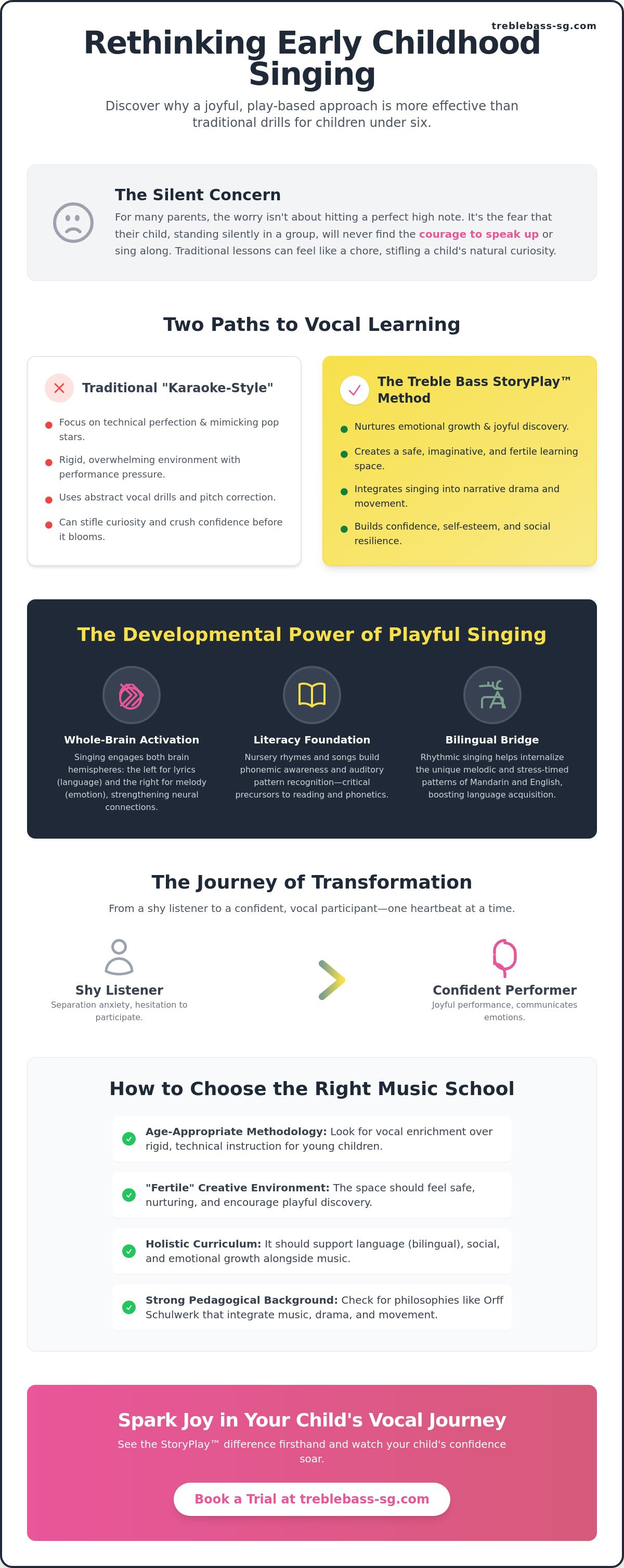
Imagine your three year old standing at the edge of a circle, eyes wide but lips tightly sealed while other children chirp along to a melody. For many parents seeking singing lessons singapore, the concern isn't whether their child can hit a perfect high note; it's whether they'll ever find the courage to speak up in a crowded classroom. Traditional, rigid vocal drills often feel like a chore for a toddler, failing to ignite the little sparks of curiosity that make early learning stick.
You likely believe that music should be a joyful adventure rather than a clinical exercise in technique. We understand that you want more than just a hobby; you want to see your child's English and Chinese vocabulary flourish while they build the self-assurance to shine. This article explores how a holistic, drama-based approach transforms the typical music class into a StoryPlay Adventure. You'll discover how we use the Ministry of Education's March 2026 early childhood framework to nurture confidence from the inside out, helping your little one find their unique voice through the magic of purposeful play.
Key Takeaways
Understand why age-appropriate vocal enrichment is more effective than traditional "karaoke-style" instruction for children under six.
Learn how StoryPlay Adventures blend narrative drama with vocal expression to create a safe, imaginative space for your child to explore.
Discover the real-life transformation of a shy student through singing lessons singapore, moving from separation anxiety to joyful performance.
Identify the critical criteria for selecting a music school, focusing on pedagogical background and the creation of a "fertile" creative environment.
Explore how a holistic, bilingual curriculum supports language acquisition and social-emotional growth alongside musical development.
Table of Contents Beyond the Mic: Why Early Childhood Singing Lessons in Singapore Look Different The Treble Bass Method: Integrating Storyplay with Vocal Expression Case Study: From Shy Listener to Confident Performer How to Choose Singing Lessons for Kids in Singapore Spark Joy at Treble Bass: Your Child’s Vocal Journey Starts Here
Beyond the Mic: Why Early Childhood Singing Lessons in Singapore Look Different
For a child under six, the world is a stage of sensory wonder. This is why singing lessons singapore at Treble Bass look nothing like the vocal booths you might find in a commercial studio. We define Vocal Enrichment as a holistic process that prioritizes a child's emotional and cognitive growth over technical perfection. Traditional karaoke-style lessons, which often focus on mimicking pop stars, can be incredibly overwhelming for preschoolers. These rigid environments demand a level of vocal control and performance pressure that can stifle a child's natural curiosity before it has a chance to shine. Instead, we cultivate a fertile learning environment where the voice is treated as a natural extension of a child's play.
In Singapore's bilingual landscape, rhythmic singing serves as a vital bridge for language acquisition. The melodic lilt of Mandarin and the stress-timed rhythm of English become much easier to grasp when they are wrapped in a song. By engaging the whole body through music, we turn a simple melody into a kinesthetic experience that helps children internalize vocabulary and sentence structures naturally.
The Developmental Power of Early Vocalization
Singing activates both hemispheres of the brain simultaneously. The left hemisphere processes the linguistic structure of the lyrics, while the right hemisphere manages the melodic contours and emotional resonance of the tune. When a toddler sings nursery rhymes, they are building essential phonemic awareness. This is the foundation of literacy. Auditory patterns refer to the brain's ability to identify, organize, and interpret sequences of sounds; this skill is a critical precursor to reading readiness and phonetic decoding. By practicing these patterns in a joyful setting, children prepare their minds for the academic challenges of primary school without even realizing they are learning.
Nurturing vs. Instructing: Our Philosophy
Rigid instruction can crush a child's confidence before it even blooms. At Treble Bass, we replace strict vocal drills with playful discovery. Our philosophy is deeply rooted in the Orff Schulwerk approach, which integrates music with movement and drama to make learning feel like a natural, lived experience. We believe maternal empathy is the most important tool in a child's first performance experience. It isn't about standing under bright lights on a stage. It's about the safe, warm connection between a teacher and a student. We watch for those little sparks of interest, such as a child swaying to a beat or humming a refrain, and we nurture them until they grow into sustained confidence. This journey from a shy listener to a vocal participant happens one heartbeat at a time.
The Treble Bass Method: Integrating Storyplay with Vocal Expression
Most singing lessons singapore for older students focus on vocal mechanics like diaphragmatic breathing or pitch correction. For a toddler or preschooler, these concepts are too abstract and often quite dull. At Treble Bass, we've replaced clinical drills with our unique StoryPlay Adventures. In these sessions, singing isn't a standalone task; it's a natural response to a narrative. Whether we're exploring an underwater kingdom or a busy forest, children find their voices because they have a story to tell. By the time they transition from our foundational Bubbles program to the more expressive Adventurers drama sessions, they aren't just singing notes. They're communicating emotions and building the character of a confident performer.
Our approach recognizes that a child's voice develops in tandem with their imagination. Instead of diagnosing "bad habits," we lean into the joy of vocal discovery. This methodology is particularly beneficial for non-cognitive constructs such as self-esteem and social resilience. When a child sings as part of a story, the pressure to be "perfect" vanishes. It's replaced by a sense of wonder that encourages even the quietest student to contribute their own little sparks of sound to the group melody. If you want to see this transformation firsthand, you can book a trial session to experience the StoryPlay difference.
Kinesthetic learning is at the heart of everything we do. Singaporean children often spend much of their day in structured, sedentary environments. We break that mold by ensuring they move while they sing. This physical engagement helps internalize rhythm and makes the act of vocalization feel safe and grounded. It's about more than just music; it's about helping a child feel at home in their own body while they find their voice.
English vs. Chinese Vocal Journeys
We address the bilingual needs of Singaporean families through two distinct paths. Our Playtots Mandarin sessions (Ages 1-3) use traditional and contemporary songs to make the four tones of the language feel intuitive. Meanwhile, the Bloomers English drama program focuses on vocal projection and clarity. By using drama as a vehicle for song, we help children refine their pronunciation in both languages, ensuring they develop the linguistic tools needed for a multicultural society.
The Role of Rhythm and Movement
Rhythm is the heartbeat of our curriculum. Our Starsteps themed dance activities complement vocal lessons by teaching children how to coordinate their movements with a beat. For our youngest learners, Baby C activities build essential motor skills through rhythmic tapping and clapping. We believe that swaying and shining in class is just as important as hitting the right note. These joyful movements create a fertile environment where a child’s confidence can truly bloom from the inside out.
Case Study: From Shy Listener to Confident Performer
When Chloe first joined our Bloomers English Speech & Drama program in April 2025, she was a quiet three year old who preferred the safety of her mother's lap to the center of the room. Like many children her age, she struggled with intense separation anxiety. Her first experience with singing lessons singapore was marked by observant silence rather than vocal participation. For Chloe, the challenge wasn't a lack of interest; it was the need for a fertile environment where she felt safe enough to let her guard down. We believe that every child has a song inside them, but for some, the journey to finding that voice requires a more delicate, maternal approach.
Over the next six months, we witnessed a profound "inside out" transformation. By month three, Chloe began participating in small group refrains, her whispers gradually turning into audible melodies. By the end of her second term, she wasn't just following along; she was leading a themed song about a courageous lion. This growth in social-emotional resilience is a direct result of how we integrate vocal expression with character play, ensuring that a child’s confidence is built on a foundation of genuine joy rather than performance pressure.
Week 1-4: Building the Safe Space
During the first month, our teachers focused entirely on establishing their roles as Nurturing Experts. We didn't ask Chloe to sing solo or stand on a stage. Instead, we used sensory props like shimmering silk scarves and soft rhythmic shakers to invite her into the story. These tools served as a bridge, helping her overcome stranger anxiety by focusing on the tactile wonder of the moment. These initial vocal sparks were small, perhaps just a hum during a transition, but they were the essential first steps in her vocal journey. Unlike the more rigid singing lessons singapore often provides, our priority was making the studio feel like a second home.
The Breakthrough: The Final Performance
The true breakthrough occurred during our end-of-term StoryPlay showcase. Chloe took the lead in a narrative about a lost star, singing with a sense of joyful purpose that left her parents in awe. Her mother later shared that Chloe’s communication at home had flourished, with the toddler now initiating conversations and singing her favorite Mandarin and English songs during bath time. The magic of a child tapping a drum for the first time is the sound of a heartbeat finding its rhythm in the world. It signals a shift from being a passive observer to an active, confident participant in their own life story.
How to Choose Singing Lessons for Kids in Singapore
Selecting the right program is a significant decision for any parent. In a city where enrichment options are plentiful, it's easy to get lost in flashy marketing or "pop star" promises. When looking for singing lessons singapore, prioritize centers that maintain a low teacher to student ratio. This ensures your child receives the individual attention needed to feel safe and seen. A qualified educator should possess more than just vocal talent; they need a deep understanding of early childhood pedagogy. Verified qualifications in methodologies like Kodály, Orff Schulwerk, or Dalcroze Eurhythmics are benchmarks for quality that align with the Ministry of Education's 2026 early childhood framework.
Beyond credentials, perform an environment check. Is the studio just a room with a microphone, or is it a fertile space for creativity? A child’s voice thrives in a setting that encourages kinesthetic learning and imaginative play. For families living near Holland Village or Central Singapore, finding a community oriented space makes the weekly journey a joyful part of the family routine. A holistic curriculum should focus on the child's entire well-being, using music as a transformative tool for development rather than a series of technical drills.
Red Flags to Avoid in Kids' Vocal Programs
It's vital to protect your child's unique journey from high pressure environments. Avoid programs that push for individual instrument exams or formal grading before the age of six. At this stage, vocal cords and emotional resilience are still developing; premature testing can lead to vocal strain or a loss of interest. Be wary of "pop star" branding that ignores emotional safety in favor of stage presence. Additionally, steer clear of rote learning where children simply memorize lyrics. This approach fails to build true language proficiency or the auditory patterns necessary for reading readiness.
The Importance of Parent-Child Bonding
We believe that music is a facilitator of family bonding. Our Baby C and toddler classes prioritize meaningful connections, recognizing that a parent is a child's first and most influential teacher. You don't need to "practice" at home in a formal, rigid sense. Instead, try integrating music into your daily Singaporean family life. Sway to a rhythm while waiting for the bus, or hum a familiar StoryPlay melody during a quiet moment. This reinforces the little sparks of curiosity lit during class and turns music into a lived experience. If you are ready to see your child's confidence bloom in a nurturing environment, explore our current class offerings to find the right fit for your little one.
Spark Joy at Treble Bass: Your Child’s Vocal Journey Starts Here
Choosing the right path for your child’s musical journey is about more than just finding a classroom. At Treble Bass, we’ve created a sanctuary where music, drama, and language converge to celebrate the wonder of early childhood. Our approach to singing lessons singapore is built on the belief that when a child feels safe and understood, their potential is truly limitless. We don't just teach songs; we nurture the whole child from the inside out. We ensure that every little spark of curiosity is met with empathy and professional expertise. This bilingual and holistic foundation helps your child develop a voice that is both strong and uniquely their own, preparing them for a lifetime of confident self-expression.
Our studio is designed to be a fertile musical learning environment, far removed from the clinical atmosphere of traditional tuition centers. We value the meaningful connections formed between parent, child, and teacher. This community oriented approach is what makes the Treble Bass family so special. We invite you to witness the magic of our classes firsthand, where laughter and discovery are the primary curriculum. It’s a space where your child can sway, shine, and find their rhythm in a world that often moves too fast.
What to Expect in Your First Trial
A trial session isn't an audition; it’s an invitation to explore a world of imagination. Our trial sessions for singing lessons singapore are designed to be low pressure and high discovery. When you step into our studio in Singapore Central, you’ll receive a guided tour of our joyful space and meet the passionate mentors who will guide your child. We introduce our StoryPlay Adventures gently, allowing your little one to acclimate at their own pace. During this time, we assess your child’s unique developmental stage rather than just their vocal range. We look at how they interact with rhythm, their comfort in a group, and their willingness to engage with narrative. This holistic assessment ensures they’re placed in a level where they can truly flourish.
Enrolling for the 2026 Term
Our term-based enrollment is designed to provide a steady, narrative-driven flow for every student. Whether they are starting with the sensory wonder of Playtots, the imaginative world of Bubbles, or the expressive drama of Bloomers, they are joining a community that values family bonding as much as artistic growth. Consistency is key in early development, and our structured yet playful curriculum supports this growth throughout the year. For a deeper look at how to navigate these choices, read our Best Music Classes for Toddlers in Singapore: A Nurturing Guide for 2026. We invite you to become part of the Treble Bass family and witness the transformation that happens when a child finds their voice from the inside out. Book a Trial at Treble Bass Today and let your child's vocal journey begin with joy.
Watch Your Little Star Find Their Voice
Finding the right singing lessons singapore means choosing a space that values your child's emotional journey as much as their musical progress. We've seen how integrating drama with song through our StoryPlay Adventures creates a safe, fertile environment where even the shyest children begin to shine. From building auditory patterns that support reading readiness to fostering bilingual fluency in English and Mandarin, our holistic approach ensures that every child develops at their own unique pace. It's about more than hitting the right note; it's about the social-emotional resilience that comes from being heard and celebrated.
Since our founding in 2015, Treble Bass has dedicated over a decade of early childhood expertise to refining this specialized curriculum. Our nurturing mentors bring prestigious artistic backgrounds to every session, ensuring your child is guided by experts who lead with empathy and maternal wisdom. We invite you to join our community and witness those first little sparks of confidence for yourself. The journey from a quiet observer to a joyful performer is a path we are honored to walk alongside your family.
Book a StoryPlay Trial and Spark Your Child's Joy Today. We can't wait to welcome you into our family and help your little one's confidence bloom from the inside out.
Frequently Asked Questions
What is the best age to start singing lessons for a child in Singapore?
Children can begin their musical journey as early as 12 months old. Starting at this tender age aligns with the Ministry of Education's March 2026 framework, which emphasizes Aesthetics and Creative Expression as a key learning area. Early exposure to melody and rhythm helps fire up neural pathways, making it the perfect time to introduce the wonder of sound through playful discovery.
How do singing lessons help with my child's language development?
Singing accelerates language acquisition by helping children recognize auditory patterns and phonemic structures. When toddlers sing, they engage with the rhythm and intonation of speech, which is vital in Singapore’s bilingual environment. This process builds the foundational skills needed for reading readiness and expands vocabulary in both English and Mandarin through joyful, melodic repetition.
Will my child have to take exams or perform in front of large crowds?
We don't believe in high pressure exams or intimidating crowds for children under six. Our focus is on nurturing confidence through small, safe storyplay showcases that spark joy. These intimate performances celebrate a child's unique journey rather than testing their technical range, ensuring their first experience with the performing arts feels like a natural extension of play.
What is the difference between a music school and a storyplay enrichment center?
While a traditional music school often focuses on technical proficiency and instrument mastery, a storyplay center integrates drama and narrative into the curriculum. We use song as a transformative tool for holistic development, focusing on social emotional resilience and kinesthetic learning. This approach ensures that singing lessons singapore feel like an adventure rather than a rigid classroom exercise.
Are the classes at Treble Bass conducted in English or Chinese?
Our classes are thoughtfully designed to support the bilingual needs of Singaporean families. We offer specific Mandarin through Storyplay workshops, such as our Playtots sessions, alongside our English based Bloomers drama programs. This dual language approach ensures that children develop vocal clarity and confidence in both languages while exploring the magic of music and storytelling.
Can shy children benefit from vocal and drama lessons?
Shy children often thrive in our classes because we prioritize emotional safety and meaningful connections. By using sensory props and imaginative stories, we invite quiet students to contribute their own little sparks of sound without the pressure of a spotlight. Over time, this supportive environment helps them find their voice and build the self assurance needed for school life.
Do you offer trial classes for new students in Singapore Central?
Yes, we invite new families to join us for a trial session in our Singapore Central studio to experience the Treble Bass difference firsthand. This is a wonderful opportunity to meet our passionate mentors and explore our fertile learning environment. You'll witness how our StoryPlay Adventures ignite curiosity and joy in your child before you commit to a full term.
How much do singing lessons for toddlers cost in Singapore?
Market rates for singing lessons singapore vary depending on the format and age group. As of April 2026, hourly rates for children aged 6 to 11 generally range from SG$31.70 to SG$52.83. For younger toddlers, specialized workshops like our Playtots Mandarin sessions are priced at $27 per child, providing a nurturing and accessible entry point into early childhood music education.


Comments