_edited.jpg)
The Nurturing Parent’s Guide to Mandarin Storyplay for Toddlers in Singapore (2026)
What if the secret to your child’s bilingual future isn't found in a textbook or a rigid drill, but in the magic of a shared story? Many parents in Singapore feel a quiet worry when Mandarin begins to feel like a chore rather than a joy. It's natural to feel concerned when your little one stays silent during activities, especially when you seek a nurturing Mandarin storyplay for toddlers Singapore experience that respects their unique pace. You aren't alone in wanting a path that celebrates discovery over memorization.
This guide will show you how joyful storytelling transforms Mandarin from a daunting subject into a lifelong love for your toddler. We promise to help you bridge the gap between language learning and emotional connection through sensory play and purposeful movement. We will explore how programs like Playtots help your child find their voice through whimsical discovery, improved confidence, and meaningful family bonding.
Key Takeaways
Uncover why the "Language Window" between ages one and three is the most critical time for your child to develop natural phonetic sensitivity through sensory-rich experiences.
Learn how a nurturing Mandarin storyplay for toddlers Singapore session uses music and puppets to transform abstract sounds into tangible, joyful discoveries.
Discover the profound difference between curiosity-led immersion and traditional rote learning methods that can lead to early language burnout.
Gain gentle, empathetic strategies to help your toddler navigate new environments and transition smoothly into their first bilingual classroom adventure.
Explore how the Playtots program provides a safe space where professional expertise and maternal warmth cultivate your child’s growing confidence and vocabulary.
Table of Contents
Why Mandarin Storyplay is Essential for Toddlers in Singapore
Imagine a space where language isn't a task to be completed, but a world to be explored. Mandarin storyplay for toddlers Singapore is a beautiful tapestry that weaves together narrative, sensory exploration, and dramatic expression. Instead of static lessons, children experience a living language through the touch of a velvet puppet, the rhythm of a wooden drum, and the warmth of a shared story. This holistic approach ensures that every new word is wrapped in a joyful memory, making the learning process feel as natural as breathing.
Scientific insights into how children acquire language highlight a critical "Language Window" between the ages of one and three. During these precious years, a child's brain is uniquely tuned to phonetic sensitivity, allowing them to absorb the distinct tones of Mandarin with remarkable ease. By introducing storyplay now, we cultivate a deep-seated comfort with the language's sounds before the analytical mind begins to prioritize a single dominant tongue. It’s about planting seeds in fertile soil, allowing a positive cultural identity to take root through gentle, consistent nourishment.
Many traditional methods rely on flashcards and rote repetition, but these often fail to capture a toddler's heart. When we prioritize emotional connection over memorization, the language becomes a tool for bonding rather than a source of stress. A child who associates Mandarin with the laughter of a story and the excitement of play won't see it as a "subject" later in school. They'll see it as a familiar friend, fostering a sense of belonging that lasts a lifetime.
The Science of Storyplay and Cognitive Growth
Narrative structures act as a roadmap for developing minds, helping toddlers predict language patterns and expand their vocabulary through context. When a child actively participates in a story, the physical movement and sensory input anchor new words into their long-term memory more effectively than passive listening. Storyplay harmoniously engages both the analytical left brain and the creative right brain to create a comprehensive learning experience that resonates deeply within the child.
Navigating the Bilingual Challenge in Singapore
In many Singaporean households, English has become the primary language of daily life. This can make Mandarin feel foreign or even intimidating when children first encounter it in a formal setting. Low-pressure immersion through programs like Playtots prevents the "Mandarin resistance" that often surfaces during the primary school years. By creating a "safe space" where toddlers feel confident to experiment with new sounds without the fear of being wrong, we foster a sense of linguistic pride from the very start.
The Anatomy of a Nurturing Mandarin Storyplay Session
A nurturing session begins long before the first storybook opens. It starts with a rhythmic ritual, a gentle song or a familiar movement that signals to your child it's "Mandarin time." This transition creates a sense of safety and predictability, allowing toddlers to lower their guard and open their hearts to a new language. Within this cozy environment, every element is designed to spark wonder and curiosity. The room transforms into a landscape of discovery where every sound and texture has a story to tell.
Scientific insights from the National Institutes of Health explore the cognitive benefits of bilingualism, revealing that early exposure to multiple languages strengthens a child's ability to focus and solve problems. In a high-quality Mandarin storyplay for toddlers Singapore experience, these benefits are realized through joyful interaction rather than pressure. We use puppets, silk scarves, and textured props to bring characters to life, ensuring that language is something a child can see, touch, and feel.
Rhythm, Melody, and Mandarin Tones
Toddlers possess a natural affinity for melody, often responding to the musicality of Mandarin tones before they can articulate specific words. By using quality instruments and rhythmic chants, we help children distinguish between the linguistic nuances of the language in a way that feels like a game. This musical foundation is so vital that many parents find it complements the best music classes for toddlers in Singapore, creating a harmonious blend of auditory development and phonetic awareness.
Hands-On Creativity and Fine Motor Skills
Tactile exploration is a cornerstone of the storyplay experience. When children use puppets to act out a scene or feel the "grass" while learning the word for green, the language becomes tangible. We often incorporate process-oriented art, where the focus remains on the act of creating rather than a perfect final result. This hands-on approach helps toddlers associate Mandarin words with physical objects, solidifying their understanding through their fingertips while developing essential fine motor skills.
The "Bonding Bridge" is the most beautiful part of the session. As a parent, your presence provides the emotional anchor your child needs to take risks with new sounds. You aren't just an observer; you're a partner in discovery. If you're looking for a space where this connection is celebrated, our Playtots Chinese storyplay program offers a gentle introduction to this magical world. By moving together and laughing together, you show your child that Mandarin is a language of love and connection.
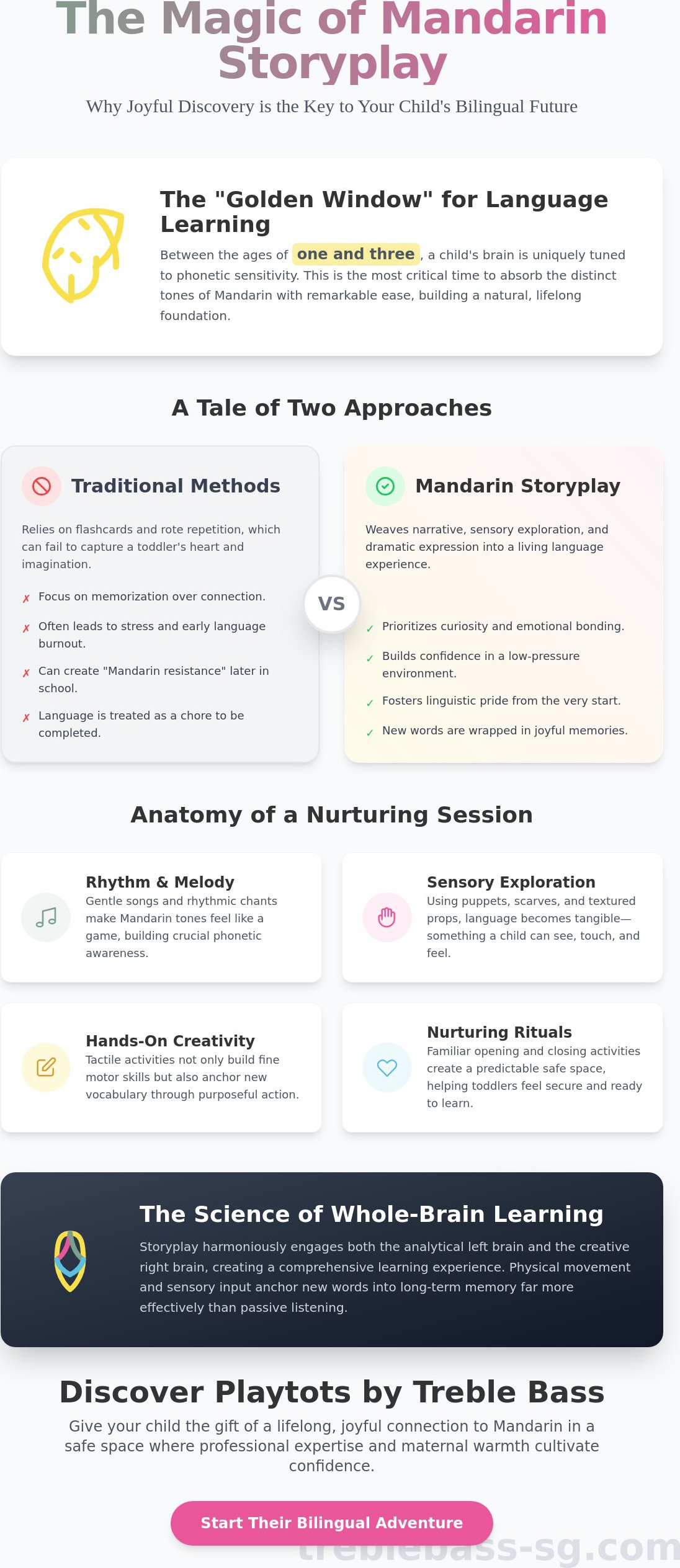
Mandarin Storyplay vs. Traditional Enrichment: A Comparison
Choosing the right path for your child's bilingual journey often feels like a choice between two worlds: the rigid flashcard or the whimsical puppet. In many traditional enrichment settings, the focus remains on rote repetition and testing, which can quickly turn a beautiful language into a chore. For a two-year-old, this pressure to perform often leads to early burnout or a quiet, stubborn resistance. In contrast, Mandarin storyplay for toddlers Singapore prioritizes curiosity and context, turning every session into a joyful engagement where children learn because they want to, not because they have to.
Success in early bilingualism shouldn't be measured by a vocabulary list alone. While traditional classes might boast about the number of nouns a child can recite, storyplay looks at the sparkle in their eyes when they hear a Mandarin song. Research from the University of Miami on play and language development emphasizes that children learn best when they are active participants in their own discovery. By focusing on genuine interest, we build a foundation that supports lifelong learning rather than short-term memorization.
Consider these fundamental differences in approach:
Rote Learning: Focuses on repetition and accuracy, which can create a fear of making mistakes.
Immersion Storyplay: Focuses on storytelling and sensory play, making the language feel like a natural part of the child's world.
Success Metrics: Moving from counting words to celebrating a child's willingness to initiate a conversation in Mandarin.
Why Traditional "Academic" Classes May Backfire
Making Mandarin feel like "work" is a common pitfall for parents of toddlers. When a child feels pressured to get the tones right or repeat words on command, their "Affective Filter" rises. This emotional barrier, common in high-pressure settings, prevents language from being absorbed naturally and often leads to language anxiety. Storyplay keeps this filter low by wrapping the language in a warm, safe environment where mistakes don't exist, only opportunities for discovery and laughter.
The Drama Advantage: Building Early Confidence
Drama-based play is a powerful tool for helping even the shyest toddlers find their voice. When a child steps into the role of a hungry caterpillar or a playful panda, they aren't just practicing Mandarin; they're building the confidence to express themselves. This approach is a cornerstone of our philosophy, much like what you'll find in our specialized speech and drama class Singapore guide. By using characters as a shield, children feel brave enough to experiment with new sounds and sentence structures. These early experiences in dramatic expression foster essential social-emotional development, teaching children how to connect with others and navigate their world with empathy and vibrance.
Preparing Your Toddler for Their First Mandarin Adventure
Stepping into a new environment can feel like a grand adventure for a little soul, but it's also natural for them to feel a bit hesitant. Preparing for your first Mandarin storyplay for toddlers Singapore session is about more than just packing a bag; it’s about gently preparing your child’s heart and mind. You can start this journey at home by playing soft Mandarin nursery rhymes or reading a simple board book together. These familiar sounds act as a comforting bridge, making the transition to a classroom feel like a continuation of your special bonding time rather than a sudden change.
If your toddler experiences "new environment jitters" or separation anxiety, meet those feelings with deep maternal empathy. It’s okay to take things slow. A nurturing teacher understands that every child’s pace is unique, allowing them to observe from the safety of your lap until they feel the spark of curiosity pull them toward the play mat. To ensure a focused and comfortable session, pack a few essentials like a familiar water bottle and a spare set of clothes for sensory play. This physical comfort allows their cognitive energy to focus entirely on the whimsical stories and new vocabulary being shared.
Creating a Positive Pre-Class Ritual
Use the commute to Holland Village as a time to transition into "Chinese mode." A specific song played in the car can signal that something wonderful is about to happen. Arriving ten minutes early at our Holland Village center allows your child to explore the space at their own rhythm, turning the environment into a familiar playground before the session officially begins. A calm, present parent leads to a curious and settled toddler, as they often mirror your own sense of ease and excitement.
What to Look for in a Quality Enrichment Center
When choosing a center, look for small teacher-to-student ratios that ensure your child receives the individual warmth they deserve. The teachers should possess native-level proficiency combined with a nurturing heart, capable of guiding a child's linguistic development through empathy. The "vibe check" is equally important; the space should feel bright, safe, and alive with joyful energy. For many busy Singapore families, the convenience of a Holland Village location makes it easier to integrate these enriching moments into a weekly routine. If you’re ready to start this journey, explore our nurturing classes and see how a playful environment sparks a natural love for language.
The "Home Echo" is where the magic truly settles. After class, try to use one or two words from the day’s story during bath time or dinner. This simple repetition reinforces their learning without it ever feeling like a lesson, keeping the spirit of discovery alive throughout the week. By weaving these tiny threads of Mandarin into your daily life, you help your child see that the language is a beautiful, living part of their world.
Discover Playtots: Treble Bass’s Signature Mandarin Storyplay
At Treble Bass, we believe every child’s language journey should be as unique as their own personality. Our Mandarin storyplay for toddlers Singapore sessions are specifically designed for toddlers aged 1 to 3, providing a whimsical sanctuary where language is caught through play rather than taught through drills. This is where high-level professional expertise meets the warmth of a nurturing mentor who understands the delicate rhythms of early childhood. We don't just teach words; we cultivate an environment where your child feels safe to explore the vibrant tones of Mandarin through a seamless blend of music, sensory props, and dramatic expression.
Our Playtots Chinese storyplay experience is more than just an enrichment class; it's a gathering place for a supportive community. Located in the heart of Holland Village, we bring together families who value meaningful connections and holistic development for their little ones. When you join our community, you're entering a space that celebrates the wonder of early childhood, ensuring that your little one's first steps into a second language are filled with laughter, light, and a sense of joyful purpose.
The Treble Bass Difference: Nurturing the Whole Child
We understand that many families in our community seek a comprehensive bilingual foundation that respects a child's natural development. Our unique approach is designed to support both English storyplay and Mandarin growth, ensuring your child develops confidence across both languages simultaneously. The passion behind our teachers is what truly sets us apart. They are experienced experts and artistic mentors who celebrate every small win, whether it's a toddler’s first spoken Mandarin word or their very first brave interaction with a storybook puppet. Holland Village parents frequently share heart-warming stories about how their children transform from shy observers into enthusiastic participants who are genuinely excited for their weekly sessions.
Start Your Toddler’s Joyful Journey Today
Taking the first step into this world of discovery is simple and inviting. You can book a trial session to experience the magic of our Mandarin storyplay for toddlers Singapore firsthand and see how our methods resonate with your child’s natural curiosity. During your first visit, you'll find a welcoming, narrative-driven atmosphere where you and your toddler can explore our sensory-rich environment together. As your child grows and their confidence matures, their journey continues seamlessly from Playtots into our Adventurers Chinese Speech & Drama program for children aged 3 to 6. This long-term pathway ensures that the seeds of language planted in infancy grow into a robust tree of communication and self-expression. The gift of language is the greatest legacy you can provide, opening doors to culture, empathy, and global connection. By choosing a path of joyful discovery today, you're giving your toddler the confidence to navigate a bilingual world with a happy, resilient heart.
Embrace the Magic of Your Child's Bilingual Journey
Your child’s journey into Mandarin doesn't have to be a struggle or a source of stress. By choosing a path of sensory exploration and dramatic play, you transform a potentially daunting subject into a whimsical world of wonder. We've explored how the critical language window makes this the perfect time for Mandarin storyplay for toddlers Singapore, where every puppet, texture, and song builds lasting phonetic confidence and emotional connection. It’s about creating a foundation of joy that supports your child’s holistic development for years to come.
Since 2015, our nurturing expert faculty has been dedicated to cultivating these early connections through our specialized programs. Our convenient Holland Village location offers a safe, vibrant space where your family can thrive and bond together. It's time to move beyond the limitations of rote learning and embrace the magic of discovery. Book a Playtots Trial at Holland Village Today and witness how a playful environment sparks a natural, effortless love for language. We can't wait to welcome you and your little one into our community, where every small win is celebrated with a warm and patient heart.
Frequently Asked Questions
Is my 18-month-old too young for Mandarin storyplay?
Not too young at all; 18 months is right in the heart of the "Language Window" we discussed. At this stage, their brains are uniquely tuned to absorb phonetic sounds with remarkable ease. A Mandarin storyplay for toddlers Singapore program like Playtots uses music and movement to make these new sounds feel natural, safe, and incredibly exciting for a developing mind.
My toddler doesn’t speak any Mandarin at home; will they be lost?
Not at all; they'll be supported by sensory cues and physical props that bridge the gap between sounds and meaning. Even if your home is English-dominant, toddlers use context clues and whimsical characters to understand the story. Our teachers use puppets and textures to ensure no child feels lost, building a safe space for discovery and confidence.
What is the difference between a playgroup and a storyplay class?
Storyplay is more intentionally structured around narrative and dramatic expression than a standard playgroup. While playgroups offer general socialization, a storyplay class uses a specific story arc to introduce vocabulary in a meaningful context. It’s a purposeful blend of artistic discovery and language acquisition that targets cognitive growth through the magic of imagination and active play.
How long does it take to see progress in my child’s Mandarin skills?
Every child’s journey is unique, but many parents notice improved confidence within just a few sessions of Mandarin storyplay for toddlers Singapore. You might first see your toddler responding to specific songs or recognizing colorful story props at home. True linguistic progress starts with a joyful interest in the sounds themselves before they begin to speak their first words.
Can I join the class with my toddler, or is it independent?
Our Playtots sessions are designed as a shared bonding experience for you and your child. Having a parent or caregiver present provides the emotional anchor a toddler needs to feel brave in a new environment. It’s a beautiful way to create a "Bonding Bridge" that allows you to continue the storyplay magic long after the class ends.
What happens if my child is shy and refuses to participate?
We welcome shy children with deep patience and empathy, as we know observation is a very active form of learning. A toddler who watches from the sidelines is still absorbing the rhythms and tones of the language. Our teachers are trained to celebrate every small win, allowing your child to join the circle only when they feel ready.
Are the stories used in class culturally relevant to Singapore?
Yes, we select stories that resonate with a child's daily life and experiences here in Singapore. Whether it’s themes of family, nature, or local celebrations, the content is designed to be relatable and engaging. This helps children see Mandarin as a living, breathing language that belongs in their own world rather than just a classroom setting.
How does storyplay compare to a standard phonics or language class?
Storyplay focuses on the heart and the imagination rather than rigid drills or memorization. Standard phonics classes often prioritize technical accuracy, which can lead to early language anxiety. Storyplay keeps the "Affective Filter" low, ensuring that language learning feels like a joyful adventure. This nurturing approach builds a much stronger foundation for long-term fluency and a genuine love for Mandarin.


Comments