_edited.jpg)
The Parent’s Guide to Chinese Storyplay Class for Toddlers in Singapore (2026)
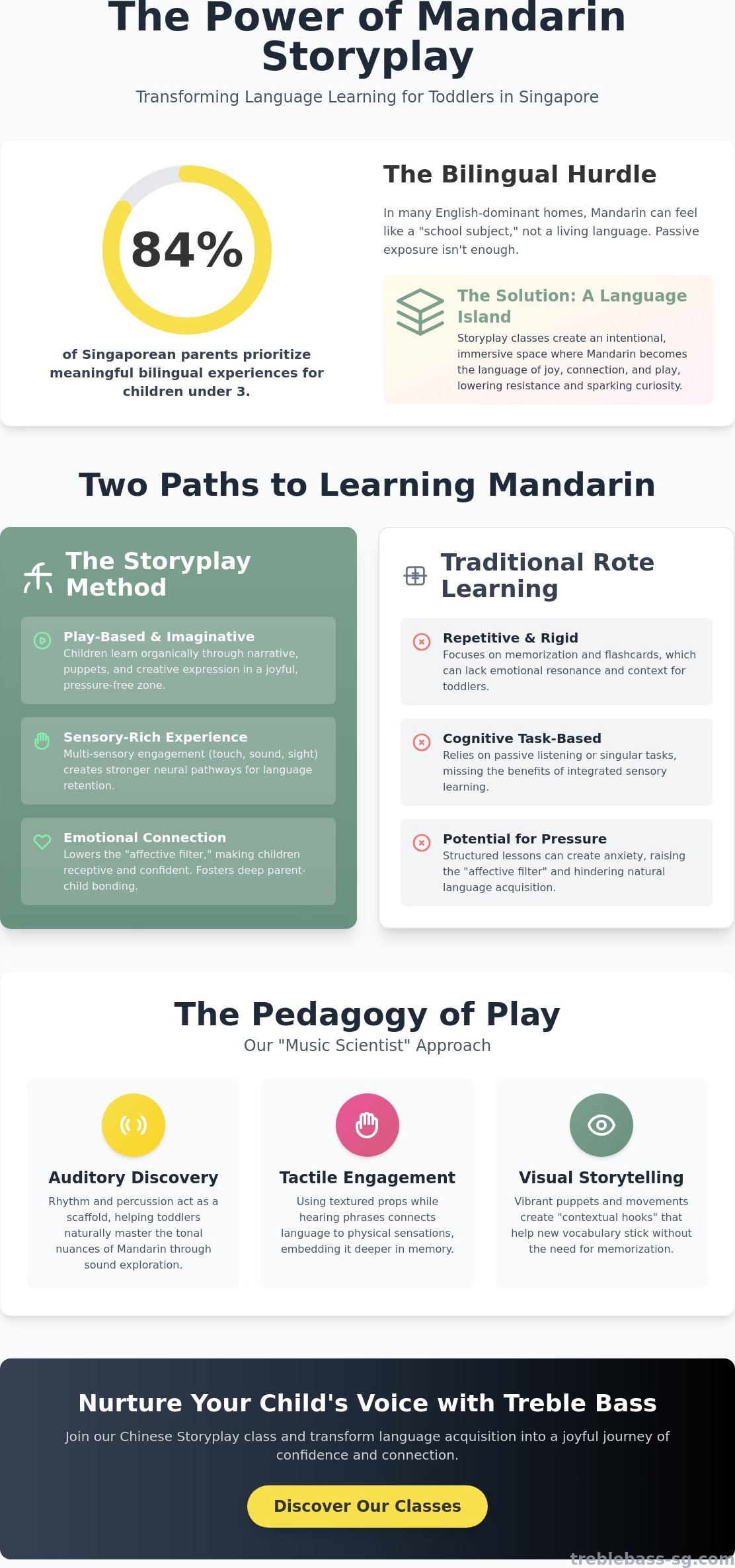
Did you know that 84% of parents in Singapore now prioritize meaningful bilingual experiences before their child even reaches the age of three? You likely feel that same deep desire to gift your little one the beauty of Mandarin, yet it's often a struggle when the language feels "foreign" at home or your toddler resists traditional, structured lessons. We understand that underlying anxiety about future school requirements, but we also believe that language should be a bridge to joy, not a source of pressure. When you enroll in a Chinese storyplay class for toddlers Singapore, you aren't just signing up for a lesson; you're entering a sensory-rich ecosystem where Mandarin is caught through the magic of rhythm and narrative.
In this guide, we'll show you how nurturing, play-based storytelling can transform your toddler's language journey into a daily adventure of discovery. You'll learn how these immersive sessions cultivate a foundation for bilingual confidence and foster deeper parent-child bonding through shared creative activities. We'll explore the science of why storyplay works and help you find the perfect path to help your child use Mandarin phrases with excitement and ease.
Key Takeaways
Learn why choosing a Chinese storyplay class for toddlers Singapore creates a vital "language island" in English-dominant homes, making Mandarin feel like a natural, lived experience.
Discover how the "Music Scientist" approach uses rhythm and beat to help your child naturally master the unique tonal nuances of the Mandarin language through auditory discovery.
Understand the difference between traditional rote learning and a play-based curriculum that prioritizes your child's imagination and emotional well-being over rigid repetition.
Identify the key markers of a high-quality program by evaluating the level of nurturing teacher-child interaction and the balance of the sensory environment.
Explore how the "Maternal Empathy" framework transforms early language acquisition into a joyful journey of confidence, fostering a deep and lasting connection to the culture.
Table of Contents
Why Chinese Storyplay Class for Toddlers in Singapore is Essential Today
Language is a living, breathing thing. It's not a set of symbols to be memorized or a list of words to be tested. For a toddler, a Chinese storyplay class for toddlers Singapore represents a holistic blend of narrative, sensory play, and dramatic expression. This approach moves away from the traditional "rote learning" models that many of us grew up with. Instead, it embraces organic acquisition. By focusing on ages 1 to 3, we're tapping into a critical window where a child's brain is uniquely flexible. This early exposure builds a vital phonetic foundation, allowing children to develop native-like pronunciation before the speech patterns of their dominant language become too rigid.
The Challenge of the Bilingual Household
Many Singaporean families find themselves in a common predicament. While we value our heritage, English remains the primary language spoken at home. This creates a hurdle where Mandarin can start to feel like a "school subject" rather than a natural way to communicate. We've seen that passive exposure, such as leaving a Chinese cartoon playing on a tablet, often fails to create lasting fluency. Toddlers need active, social engagement to thrive. By creating intentional "language islands" through storyplay, we turn Mandarin into a language of joy and connection. It becomes a tool for laughter and play, which lowers a child's resistance and makes them want to participate.
Beyond Flashcards: The Power of Narrative
A child's brain is naturally wired for story, not syntax. When we use flashcards, we're asking a toddler to perform a cognitive task that lacks emotional resonance. Stories, however, create "contextual hooks" that help new vocabulary stick. In a Chinese storyplay class for toddlers Singapore, we use puppets, textured props, and rhythmic movement to bring tales to life. These elements serve a specific pedagogical purpose. They lower what experts call the "affective filter," which is the emotional wall a child puts up when they feel pressured or anxious. Understanding the mechanics of second-language acquisition shows us that when a child is deeply immersed in a world of imagination, their brain absorbs language effortlessly. They aren't just hearing words; they're experiencing them through their senses, building a foundation of bilingual confidence that will serve them for a lifetime.
The Pedagogy of Play: How Our Musical Discovery Approach Works
Imagine your little one as a curious explorer of sound. In our Chinese storyplay class for toddlers Singapore, we don't just play melodies; we invite children to treat every rhythm and vibration as a tiny scientific experiment. This method transforms the toddler from a passive listener into an active participant who discovers how pitch and intensity can shift the meaning of a word. When they strike a chime or feel the hum of a drum, they're building a physical connection to the language, sparked by their own natural curiosity. We believe that by giving them the tools to "test" sounds, we're empowering them to own their learning journey from the very beginning.
This multisensory engagement is the engine behind rapid neural development. When a child feels the texture of a prop while hearing a specific Mandarin phrase, their brain creates multiple, overlapping pathways for that single concept. It's this deep integration that unlocks the cognitive advantages of bilingualism during these formative years. By involving the tactile, auditory, and visual systems at once, we ensure the language is "felt" in the body, leading to more natural and confident expression. This approach respects the child's unique developmental pace, creating an environment where complex linguistic skills are acquired through joyful, unhurried play.
Rhythm as a Language Tool
In many music classes for toddlers, rhythm is simply for keeping time. In our specialized Chinese storyplay class for toddlers Singapore, we use percussion as a scaffolding for speech. Because Mandarin is a tonal language, musical beats provide a perfect mirror for its four distinct tones. A rising beat can mimic a rising tone, while a sharp, downward movement reflects a falling one. This rhythmic repetition is the "secret sauce" for memory, turning abstract sounds into physical experiences children can easily replicate with their bodies and voices.
Drama and Social-Emotional Growth
As toddlers gain confidence, we introduce elements of dramatic roleplay. This is the foundation of our "Adventurers" style of learning, where acting out stories helps children process complex emotions in a safe, nurturing space. They begin to move from playing side-by-side to the early stages of collaborative storytelling. This transition is vital for building social confidence. When a child "becomes" a character, their hesitation about using a second language fades away, replaced by the joy of the story. If you're ready to see your child blossom, you can discover our Playtots sessions and witness this playful discovery firsthand.
Storyplay vs. Traditional Chinese Enrichment: A Comparison
When we choose a path for our children’s education, we often find ourselves at a crossroads between two very different philosophies. Think of the traditional enrichment center as a "pressure cooker." It’s designed to steam ahead with recognition, repetition, and a laser focus on future primary school syllabuses. While this might produce short-term results in word recognition, it often overlooks the delicate emotional needs of a two-year-old. In contrast, a Chinese storyplay class for toddlers Singapore acts as a "nurturing garden." Here, we prioritize imagination and emotional connection, allowing language to bloom naturally. We believe that creative sg values, like nurturing a child’s imagination, matter far more than rote learning at this tender age.
The long-term outcomes of these two paths are strikingly different. Traditional methods may prepare a child to pass a test, but storyplay prepares them to speak with heart. By focusing on the internal growth of the child, we ensure that Mandarin doesn't become a source of stress. We see each child’s journey as a unique unfolding. Instead of pushing for rigid instruction, we create an atmosphere of playful discovery. This ensures that the transition from home to a Chinese storyplay class for toddlers Singapore feels safe and inviting. When a child feels secure, their cognitive growth accelerates. They move beyond simple memorization and begin to use Mandarin as a tool for their own creative expression.
The Myth of "Just Playing"
It’s a common misconception that children are "just playing" when they’re lost in a story. In reality, play is the highest form of research for a toddler. Through play-based learning, children engage in hidden learning where they absorb complex sentence structures and vocabulary without even realizing it. They aren't falling behind their peers; they’re building a sturdier, more resilient foundation for true fluency. This sensory-rich environment allows them to experiment with sounds and meanings in a way that flashcards simply cannot replicate.
Cultural Appreciation over Memorization
Traditional methods often treat culture as a textbook chapter. We prefer lived experience. By introducing Chinese festivals through modern stories and sensory activities, we help children "feel" the language. A child who falls in love with the stories of the Mid-Autumn Festival or the legend of the Dragon Boat will naturally want to pursue the language that brings those tales to life. This emotional style of learning builds a lasting bridge to their heritage, ensuring that Mandarin remains a joyful part of their identity long after the lesson ends.
Step-by-Step: Evaluating a Chinese Playgroup or Storyplay Class
Choosing the right environment for your child's early language development is a deeply personal journey. It requires a balance between your parental intuition and an understanding of educational excellence. When you visit a Chinese storyplay class for toddlers Singapore, your first point of observation should always be the teacher-child interaction. Is the educator acting as a rigid instructor, or do they project the warmth of a nurturing expert? In a truly supportive space, the teacher follows the child's lead, using maternal empathy to turn a moment of hesitation into a breakthrough of confidence. This connection is the foundation upon which all learning is built.
Next, take a close look at the physical space. A well-designed sensory environment should be stimulating but never overwhelming. Look for soft lighting, natural textures, and a layout that encourages movement and discovery. If the room feels cluttered or the noise levels are chaotic, a toddler’s "affective filter" may rise, blocking their ability to absorb new sounds. A high-quality Chinese storyplay class for toddlers Singapore will also demonstrate a seamless blend of music, drama, and art. These shouldn't feel like separate subjects but rather a unified experience where a song leads into a story, which then blossoms into a creative craft. Finally, assess the "Joy Factor." If the children are laughing and the parents are actively engaged in the play, you’ve found a space where language acquisition happens naturally.
The Trial Class Checklist
During your trial, pay close attention to your child’s body language. When conducting a music school near me search, look for signs of "relaxed alertness." Are their eyes bright? Do they lean toward the storyteller? You should feel comfortable asking the educators about their nurturing philosophy. A "Passionate Mentor" will be able to explain how they handle a child’s resistance with patience rather than pressure. They should view your child’s unique journey as a process of cultivation, not a race toward a curriculum milestone.
Location and Community Matters
The best centers often serve as community hubs where families can connect. Choosing a central location, such as Holland Village, makes it much easier to coordinate "play-dates" after class, extending the Mandarin immersion into social time. It’s also beneficial to find an asia music school that deeply understands the local bilingual struggle. When the school community shares your mission of raising confident, bilingual children, the journey feels less like a task and more like a shared celebration. If you're ready to find a supportive community for your child, book a trial session with us and experience our nurturing environment for yourself.
Nurturing Your Child’s Voice with Treble Bass Playtots
Our flagship Chinese storyplay class for toddlers Singapore, known as Playtots, was born from a simple belief: every child's voice deserves to be nurtured with patience and whimsy. We've designed this program for little explorers aged 1 to 3, ensuring that their first steps into Mandarin are paved with warmth and encouragement. At the heart of our mission is the "Maternal Empathy" framework. We select our educators not just for their professional expertise, but for their ability to connect with a child’s heart. They are nurturing experts first. They understand that a toddler who feels safe is a toddler who is ready to speak, laugh, and discover.
We recognize that many of our families come from English-dominant homes where Mandarin can feel like a daunting mountain to climb. Playtots bridges this gap by creating a vibrant "language island" that feels like a second home. A typical session is a beautiful journey through various developmental stages. We might begin with the gentle bonding found in our Baby C 喜宝宝 sessions, focusing on the connection between parent and child. As the rhythm picks up, we transition into the imaginative dramatic play that characterizes our Adventurers style of learning. This progression ensures that the language is never forced; it's simply a natural part of the fun we share together.
The Playtots Curriculum
Our curriculum is a tapestry of sensory-rich experiences. We integrate our Starsteps themed dance and music activities to help children physically embody the sounds of Mandarin. This "whimsical discovery" phase allows toddlers to explore the language through all five senses. They might feel the texture of a prop from a story, watch the movement of a teacher’s expressive dance, or listen to the melodic rise and fall of a traditional folk tune. We also place a high value on involving parents in every session. By sharing these activities, you gain the tools and confidence to continue the Mandarin journey at home, turning everyday moments into opportunities for bilingual bonding.
Joining the Treble Bass Family
We've always prioritized holistic development over rigid milestones like instrument certification. Our goal is to cultivate a child’s entire well-being, fostering confidence and empathy alongside language skills. We've seen countless shy toddlers blossom into expressive communicators who excitedly use Mandarin phrases during play. One Singaporean parent recently shared how her daughter, who once hid behind her legs, now leads the family in Mandarin songs she learned in class. This transformation is the magic we strive for every day. We invite you to experience this joyful purpose for yourself. You can book a Playtots trial session today and begin your child’s transformative journey into the world of Chinese storyplay.
Begin Your Child's Bilingual Adventure Today
Your child’s journey into Mandarin doesn't have to be a series of rigid lessons or a source of household stress. By choosing a Chinese storyplay class for toddlers Singapore, you're opting for a path where language is woven into the magic of music, drama, and sensory discovery. We've explored how a nurturing environment lowers a child’s anxiety, allowing them to absorb new sounds with the curiosity of a scientist and the heart of an artist. It's about building a foundation where bilingualism is a joyful byproduct of meaningful connection rather than a chore to be completed.
Since 2015, we've remained dedicated to this mission of bilingual joy. Our team of Nurturing Expert educators brings high-level artistic backgrounds to every session, ensuring your child is guided by passionate mentors who value their unique pace of development. Located in a convenient Central Singapore location, we provide a warm and safe space for your family to grow together. We invite you to see the difference that maternal empathy and creative pedagogy can make for your little one. Book a Nurturing Playtots Trial Session Today and watch your toddler's voice blossom with confidence and light. We can't wait to welcome you into our community.
Frequently Asked Questions
What is the best age to start a Chinese storyplay class for toddlers?
The ideal time to begin is between 12 and 36 months old. This period represents a unique developmental window where a child's brain is exceptionally flexible for phonetic acquisition. Our Playtots program is specifically crafted for this age group, matching activities to their emerging motor skills and natural sense of wonder.
How does storyplay differ from a standard Chinese playgroup in Singapore?
Storyplay goes beyond basic supervision by integrating narrative, music, and dramatic expression into a unified learning experience. While a standard playgroup might focus on general social interaction, a Chinese storyplay class for toddlers Singapore uses themed stories to create a rich context for language. It's a holistic method where children learn through imagination rather than passive listening.
My child doesn’t speak any Mandarin; will they be lost in the class?
Your child will feel perfectly at home even with zero prior exposure to the language. We use puppets, visual cues, and expressive movement to ensure they understand the narrative flow without needing a translation. This immersive environment helps them "catch" Mandarin naturally through context and emotional connection, much like they learned their first words at home.
Do parents need to accompany the child during the Chinese storyplay sessions?
Yes, our Playtots sessions are designed as a shared experience for parents or caregivers and their toddlers. We believe these classes are a transformative tool for family bonding. By participating together, you learn the songs and gestures alongside your little one, which gives you the confidence to continue the Mandarin adventure in your daily life.
What are the benefits of a "Music Scientist" approach to language learning?
This approach uses rhythm and beat as a physical scaffolding for the tonal patterns of Mandarin. By experimenting with different sounds and instruments, toddlers map out linguistic tones through their bodies. This sensory-rich process accelerates neural growth, making the language feel like a lived experience rather than an abstract concept.
How can I support my toddler’s Mandarin learning at home if I am not fluent?
You can support your child by simply revisiting the songs and stories we explore in class. You don't need to be an expert to foster a love for the language. Use the phrases you've learned together during playtime to show that Mandarin is a tool for joy and connection, rather than a "school subject."
Is storyplay effective for preparing my child for primary school Chinese?
While our focus is on playful discovery, these sessions build the essential phonetic foundation and bilingual confidence required for future academic success. A child who enters primary school with a positive emotional connection to Mandarin is far more likely to engage with the curriculum and excel in formal lessons later on.
What should my child wear or bring to their first Treble Bass session?
We recommend comfortable, flexible clothing that allows your child to move, dance, and explore freely. Please bring a pair of non-slip socks and a water bottle to keep them hydrated. We provide all the whimsical props and instruments needed to bring our stories to life in our nurturing studio space.


Comments