_edited.jpg)
The Singapore Enrichment Competitor Landscape: Choosing the Right Path for Your Child in 2026
- luisaleeyc
- Apr 30
- 13 min read
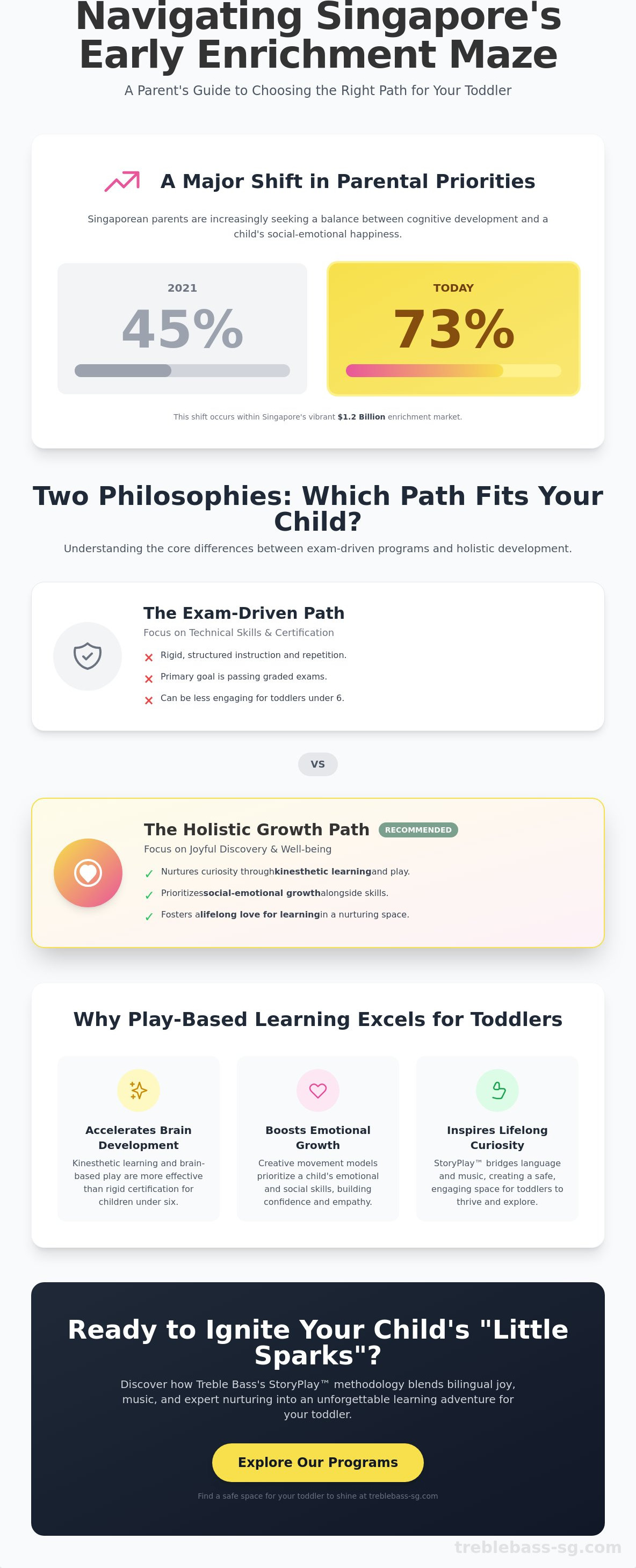
Did you know that 73% of Singaporean parents now prioritize programs that balance cognitive development with social-emotional skills? This is a significant shift from just 45% in 2021, reflecting a beautiful move toward valuing a child's happiness as much as their milestones. You likely feel the weight of this choice every time you compare an $85 right-brain training session to a $350 monthly English program. It's easy to feel overwhelmed by the sheer volume of options in our $1.2 billion enrichment market. To help you find clarity, I've analyzed the Competitor Landscape: I've identified key competitors in each niche: ranging from large academic chains to specialized, nurturing spaces like Treble Bass.
This article promises to guide you through the noise by offering a clear framework to categorize schools based on your family's values. We'll explore the vital differences between rigid exam-prep and holistic growth, ensuring you feel empowered to choose a path that ignites "little sparks" of curiosity in your toddler. By the end, you'll understand how immersive, context-rich experiences can accelerate brain development while keeping the magic of childhood alive. Let's discover where your child's potential can truly shine.
Key Takeaways
Map out the Competitor Landscape: I've identified key competitors in each niche: to help you distinguish between traditional academic prep and nurturing, boutique environments.
Learn to look beyond the piano keys by comparing traditional music instruction with creative movement models that prioritize your child's emotional and social growth.
Discover why kinesthetic learning and brain-based play are more effective than rigid certifications for children under six, fostering a lifelong love for discovery.
Gain a practical checklist for trial classes that helps you assess teacher-to-child ratios and the level of maternal empathy within the classroom.
Find out how the StoryPlay methodology bridges the gap between language acquisition and musical joy, creating a safe space for your toddler to thrive.
Table of Contents Navigating the Singapore Enrichment Competitor Landscape in 2026 Comparing Enrichment Models: From Music Schools to Storyplay Exam-Driven Programs vs. Holistic Development: The Great SG Debate Key Criteria for Evaluating Enrichment Centers in Singapore Treble Bass: Where Bilingual Joy Meets Expert Nurturing
Navigating the Singapore Enrichment Competitor Landscape in 2026
As we look toward 2026, the way we view early childhood development in Singapore is changing. Parents are no longer just looking for a place to "drop off" their toddlers; they're seeking a fertile environment where little sparks of curiosity can grow into a lifelong love for learning. Within the broader context of Singapore's education system, which is known for its academic rigor, a new movement is blooming. This movement prioritizes joy, connection, and holistic growth over rigid instruction. Today, 73% of Singaporean parents prioritize programs that balance cognitive development with social-emotional skills. This is a beautiful shift from the 45% recorded in 2021. To help you make sense of these choices, I've mapped out the Competitor Landscape: I've identified key competitors in each niche: from academic prep centers to bilingual music programs. This guide isn't just about business metrics. It's about finding a safe space where your child's potential can shine through rhythm and play.
Direct vs. Indirect Enrichment Options in SG
Understanding the difference between direct and indirect options is the first step to avoiding trial fatigue. Direct competitors include specialized speech and drama or bilingual storyplay centers that focus on specific developmental milestones through immersive experiences. Indirect competitors might be generic playgroups, traditional academic tuition, or home-based learning apps. With right-brain training classes now costing between S$72 and S$85 per session, jumping from trial to trial is both expensive and exhausting for a toddler. By analyzing the Competitor Landscape: I've identified key competitors in each niche: you can narrow your search to programs that align with your family's heart. This prevents the "kiasu" pressure from overshadowing what truly matters: your child's happiness and sensory discovery.
The Rise of Specialized Central Singapore Hubs
Central Singapore, particularly areas like Holland Village and surrounding districts, has become a vibrant epicenter for specialized enrichment. Parents are moving away from "all-in-one" mega-centers that can feel clinical or overwhelming. Instead, they're choosing boutique hubs that offer a sense of community and maternal empathy. In 2026, proximity matters, but the quality of the "nurturing expert" matters more. These specialized centers, like our own at One Holland Village, provide a sanctuary where children aren't just students, but members of a joyful musical family. Choosing a center in a specialized hub means your child grows up surrounded by like-minded peers in an environment designed for their unique journey. It's about finding a place where swaying to a rhythm and language acquisition happen naturally through StoryPlay Adventures.
Comparing Enrichment Models: From Music Schools to Storyplay
Choosing an enrichment center is like selecting the soil for a young seedling. You want an environment that offers the right nutrients for your child's specific personality. In the Competitor Landscape: I've identified key competitors in each niche: ranging from performance-focused academies to centers that prioritize the magic of play. While traditional institutions like Asia Music School focus on technical instrument proficiency and graded exams, others lean into the "how" of sound through sensory exploration. It's vital to ensure any center for children under seven is registered with the Early Childhood Development Agency (ECDA), as this ensures they meet specific safety and developmental standards. This oversight protects the quality of education in a market where 26% of programs now focus on Arts and Music.
Traditional Music Schools vs. Storyplay Adventures
For many, the goal of music education is a certificate. But for a toddler, the goal is discovery. Traditional models often emphasize sitting still and repeating scales. In contrast, StoryPlay Adventures focus on nurturing those "little sparks" of curiosity. We believe that music should be a tool for holistic development, not just a skill to be tested. If your child is between 4 months and 4 years old, they're in a prime window for kinesthetic learning. They need to sway, jump, and feel the rhythm before they ever touch a formal music staff. While speech and drama centers in the "Creative SG" landscape, such as Julia Gabriel, offer wonderful term-based programs costing between S$300 and S$500, we focus on the specific intersection of music and narrative to build confidence from the inside out.
Bilingual Programs: Immersion vs. Translation
84% of parents are now seeking early bilingual programs. However, the method matters. Some centers rely on translation or flashcards, which can feel clinical for a young mind. In our "Playtots" sessions, we use dramatic play and storytelling to make Mandarin a lived experience. It's the difference between memorizing a word and feeling the story. This context-rich approach is why 71% of providers are moving toward more creative tools with minimal screen time. For families in Central Singapore, finding a program that blends language acquisition with auditory patterns is key to long-term retention. If you're curious about how this looks in practice, you might enjoy exploring our holistic music programs designed for little explorers. This approach ensures that learning isn't a chore, but a joyful discovery shared between parent and child.
Exam-Driven Programs vs. Holistic Development: The Great SG Debate
"Will my child be behind without a certificate by age five?" It's the question that keeps many parents up at night. In a culture that often equates success with grades, the pressure to enroll toddlers in exam-prep courses is immense. With the average Singaporean household spending S$112 per month on tuition and enrichment, the pressure to see a tangible return on investment is high. Yet, the real competitive edge in 2026 isn't a piece of paper. It's the ability to think critically, empathize, and communicate. Within the Competitor Landscape: I've identified key competitors in each niche: some centers focus heavily on rote memorization to ensure "primary school readiness." However, true readiness comes from a child's social-emotional maturity. Neuroscience suggests that kinesthetic learning, which involves learning through movement and touch, is the most effective way to stimulate brain development during these formative years. This is why programs based on brain research are projected to grow by 62% this year.
The Myth of Early Certification
Pushing for individual instrument exams too early can often lead to burnout before the child even reaches primary school. When music becomes a series of tasks rather than a source of joy, the "little sparks" of curiosity begin to fade. Singapore's Early Childhood Development Agency (ECDA) emphasizes frameworks that support holistic development, focusing on how a child interacts with the world rather than just how they perform on a test. Instead of chasing passing grades, we should prioritize meaningful connections between parent, child, and the learning environment. This foundation ensures that when they do eventually face exams, they have the emotional resilience to succeed. A child who loves the piano will practice because they want to, not because they have to.
Building Confidence Through Drama and Movement
Speech and drama class Singapore programs are gaining popularity because they offer something rote learning can't: social-emotional intelligence. While rote learning teaches a child to repeat, drama teaches them to respond. Through movement and dramatic play, children learn to navigate complex social cues and build self-assurance. This is a vital skill as they transition into larger school environments. Our Starsteps dance sessions focus on developing motor skills and coordination without the heavy weight of performance pressure. Similarly, the Bloomers and Adventurers groups are designed to foster leadership through play; they encourage children to take initiative in a safe, supportive space. By choosing a path that values the process over the product, you're giving your child a fertile environment to grow. This holistic approach ensures your kids are truly future-ready, possessing the adaptability that 2026's changing world requires.
Key Criteria for Evaluating Enrichment Centers in Singapore
Walking into a trial class is often the moment of truth for a parent. You aren't just looking for a service; you're looking for a partner in your child's growth. When surveying the Competitor Landscape: I've identified key competitors in each niche: it's easy to be dazzled by shiny facilities or high-tech screens. However, the true heartbeat of a center lies in the "joyful purpose" of its daily activities. Are the children swaying with genuine delight, or are they following a rigid script? In 2026, 73% of parents prioritize programs that balance cognitive development with social-emotional skills. A fertile musical learning environment should feel safe and inviting, sparking curiosity from the moment you step through the door. It's about finding that delicate balance between professional expertise and maternal empathy.
The Trial Class Checklist
During your visit, observe how teachers interact with your little one. Are they using pedagogical terms like kinesthetic learning or auditory patterns in a way that feels accessible and grounded in expertise? A great teacher acts as a passionate mentor who celebrates the wonder of early childhood. They should facilitate parent-child bonding, especially in classes for infants and toddlers. Check if the bilingual integration feels natural. In a high-quality program, Mandarin isn't a separate "subject" but a story that comes alive through movement and song. If the language acquisition feels forced or relies on flashcards, it may not lead to the long-term retention that 84% of parents are currently seeking.
Safety, Qualifications, and Community Trust
Trust is built on transparency and experience. Verify the artistic backgrounds of the founders and the teaching experience of the staff. Do they have decades of teaching experience, or is it a generic franchise model? Teacher-to-child ratios are critical, especially for "Baby C" (infants) and toddlers. A low ratio ensures that maternal empathy isn't just a buzzword but a lived reality where every child is seen. You should look for "little sparks" of engagement—a child tapping a drum or reaching for a prop—that show they feel protected and seen. This protective environment is what allows a child's unique journey to unfold with confidence. If you're ready to see these criteria in action, book a trial class at our Holland Village studio and experience the difference of a nurturing, expert-led environment.
The location also plays a significant role in your decision. Boutique centers in central hubs like Holland Village often foster a stronger sense of community than mega-centers in crowded malls. When you choose a center that values meaningful connections over rigid instruction, you're investing in your child's entire well-being. This choice ensures that their first steps into the world of learning are filled with laughter and discovery rather than pressure.
This focus on creating joyful, active environments can be applied to all aspects of family life. For those looking for inspiration on how to pair physical activity with family outings in major metropolitan areas, Minisport HK provides an excellent guide to the best playground and restaurant combinations for young children.
Treble Bass: Where Bilingual Joy Meets Expert Nurturing
After surveying the Competitor Landscape: I've identified key competitors in each niche: it becomes clear that the most fertile ground for growth is one rooted in joy. At Treble Bass, we don't just teach notes; we nurture from the inside out. Our philosophy is built on the belief that music is a transformative tool for holistic development. While 28% of programs in Singapore focus strictly on academic preparatory work, we choose to focus on the 26% of the market that celebrates arts and music through a lens of empathy and laughter. We believe that a child who feels safe and seen will naturally reach for the stars. This is why our studio at One Holland Village is designed to be a sanctuary for playful discovery.
A Fertile Environment for Every Stage
Our programs are carefully structured to meet your child exactly where they are in their developmental journey. From "Baby C" sessions for our youngest infants to the "Adventurers" groups for preschoolers, every class is a guided tour through sound and story. Our music classes for toddlers differ from traditional schools because we prioritize the "little sparks" of curiosity over rigid instruction. We use our signature StoryPlay Adventures to create meaningful connections between parent and child. Instead of rushing through a curriculum, our "One Book One Month" approach allows children to form a deep, sensory bond with narratives. This method ensures that language acquisition and auditory patterns become a natural part of their world as they sway and play.
Join Our Community of Nurturing Experts
Our team isn't just a group of instructors; they are passionate mentors with decades of teaching experience and prestigious artistic backgrounds. We combine this professional expertise with a sense of motherly wisdom to create a protective environment for your child's unique journey. This balance is why central Singapore parents trust us for bilingual development. In our "Playtots" and "Bubbles" sessions, Mandarin is woven into the fabric of the story, making it a lived experience rather than a memorized list. For example, our "Playtots - Mandarin through Storyplay" program at One Holland Village is priced at S$27 per child and S$8 per adult for select Fridays in March and April 2026. This allows families to experience our "joyful purpose" firsthand without a heavy initial commitment.
We invite you to step into our world and see the difference that a nurturing expert perspective can make. When you choose Treble Bass, you aren't just enrolling in a class; you're joining a community that values your child's entire well-being. We focus on building confidence, emotional intelligence, and a lifelong love for learning. Book a trial session today to see your child's eyes light up as they discover the magic of rhythm and rhyme in a space where they are truly celebrated. Let's create beautiful memories together as we nurture your child's potential from the inside out.
Nurturing Your Child’s Potential Through Joyful Discovery
Choosing the right enrichment center is one of the most heart-led decisions you'll make for your toddler. We've explored how the 73% of parents prioritizing social-emotional skills are moving away from rigid, exam-driven models toward environments that value holistic growth. By analyzing the Competitor Landscape: I've identified key competitors in each niche: we've seen that the choice goes far beyond mere convenience or certificates. It's about finding a sanctuary where language acquisition and musical curiosity can bloom naturally through kinesthetic learning. Since we were founded in 2015, we've spent over a decade nurturing Singapore's children with maternal empathy and professional expertise.
Our specialized bilingual StoryPlay Adventures are led by expert mentors with prestigious artistic backgrounds who understand how to spark that inner light in every child. We invite you to experience our fertile learning environment at One Holland Village and witness the magic of meaningful connections. Don't let analysis paralysis hold you back from finding your child's happy place. Book a Trial at Treble Bass and Spark Your Child's Joy Today! Your child’s unique journey deserves a path paved with laughter and wonder.
Frequently Asked Questions
What is the best age to start enrichment classes in Singapore?
The best age to begin is as early as 4 months old, which is why our Baby C program focuses on sensory stimulation. During this window, infants are incredibly receptive to auditory patterns and rhythmic swaying. Starting early helps build a strong foundation for language acquisition and emotional security. It's about creating a safe, musical environment where your little one can discover the world alongside you.
How do Treble Bass storyplay classes compare to traditional music lessons?
Our storyplay classes prioritize the joy of discovery over the rigid structure of traditional instrument lessons. When looking at the Competitor Landscape: I've identified key competitors in each niche: many traditional schools focus on passing grades and technical proficiency. In contrast, we use music as a tool for holistic development. We believe that swaying to a story and tapping a drum should come before the pressure of a piano exam.
Are bilingual drama classes effective for children who don't speak Mandarin at home?
Immersive bilingual classes are highly effective because they rely on context rather than translation. Since 84% of Singaporean parents seek early bilingual programs, our StoryPlay adventures use dramatic play to make Mandarin feel natural. Even if your child doesn't speak it at home, the combination of music and movement helps them absorb vocabulary through lived experience. It's a gentle, joyful way to spark a lifelong interest in the language.
What should I look for during an enrichment trial class in Holland Village?
You should look for a "joyful purpose" in the classroom and a teacher who displays genuine maternal empathy. Observe whether the activities facilitate a meaningful connection between you and your child. In a boutique central hub like Holland Village, the environment should feel fertile and inviting rather than clinical. Ensure the teacher-to-child ratio allows for individual attention so your little one feels protected and seen throughout the session.
Why does Treble Bass focus on holistic development instead of instrument exams?
We prioritize holistic development because brain research shows that kinesthetic learning is vital for children under six. Rigid instrument exams often focus on rote memorization, which can stifle a child's natural curiosity. By focusing on "little sparks" of joy and emotional intelligence, we prepare children for the future in a way that technical skills alone cannot. This approach builds the resilience and adaptability needed for primary school and beyond.
How do speech and drama classes help shy children in Singapore?
Speech and drama classes provide a safe space for shy children to explore their voices through character play. Instead of being put on the spot, they become part of a story, which lowers their anxiety. This method builds social-emotional intelligence and self-assurance as they navigate different scenarios with their peers. Over time, the supportive atmosphere helps them find their confidence from the inside out, turning quiet whispers into bold expressions.
Is the Starsteps dance program suitable for boys and girls?
The Starsteps program is designed for every child, focusing on fundamental motor skills and rhythmic coordination. We believe that movement is a universal language that benefits both boys and girls during their early developmental years. The sessions are filled with laughter and discovery, allowing all children to explore their physical potential without the weight of performance pressure. It's about celebrating what their bodies can do as they sway and jump to the beat.
What is the teacher-to-student ratio at Treble Bass?
We maintain low teacher-to-student ratios to ensure that every child receives the nurturing attention they deserve. This allows our passionate mentors to build individual rapport and protect each child's unique journey. While larger centers might have crowded classrooms, our boutique approach focuses on quality over quantity. This ensures that the classroom remains a safe, calm, and joyful space where your toddler's potential can truly shine.


Comments